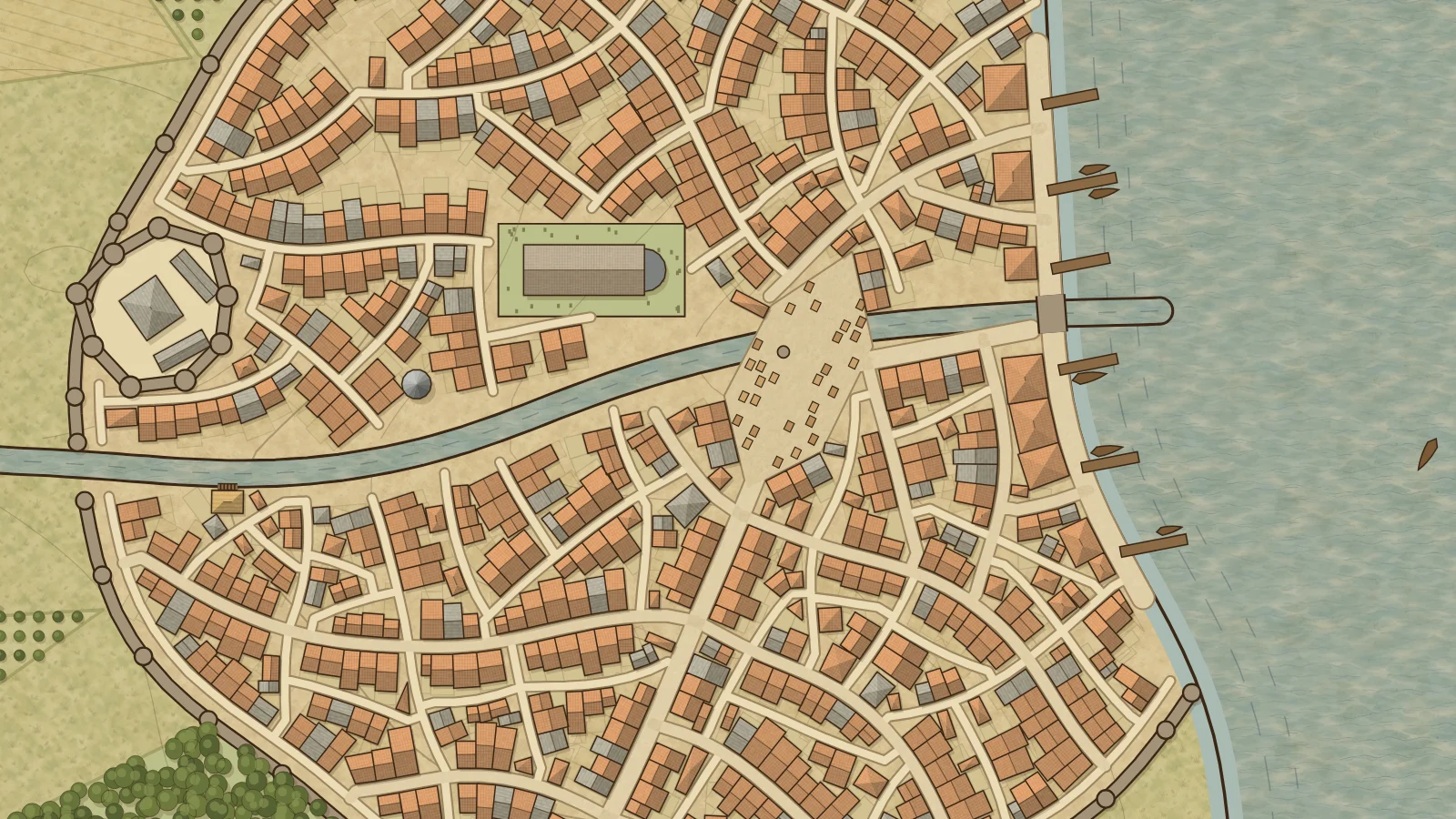
New town maps
Every town has a new map, drawn from the world around it and built in the way of its people, with up to two dozen places to find and the scars the story leaves. Builders can now edit their towns.
Every town has a new map. It is drawn from the world around it: the sea lies on the side the world map puts it, a river through town runs through the streets, and the roads that reach the town come in through its gates and become its main streets. A castle stands on the high ground.
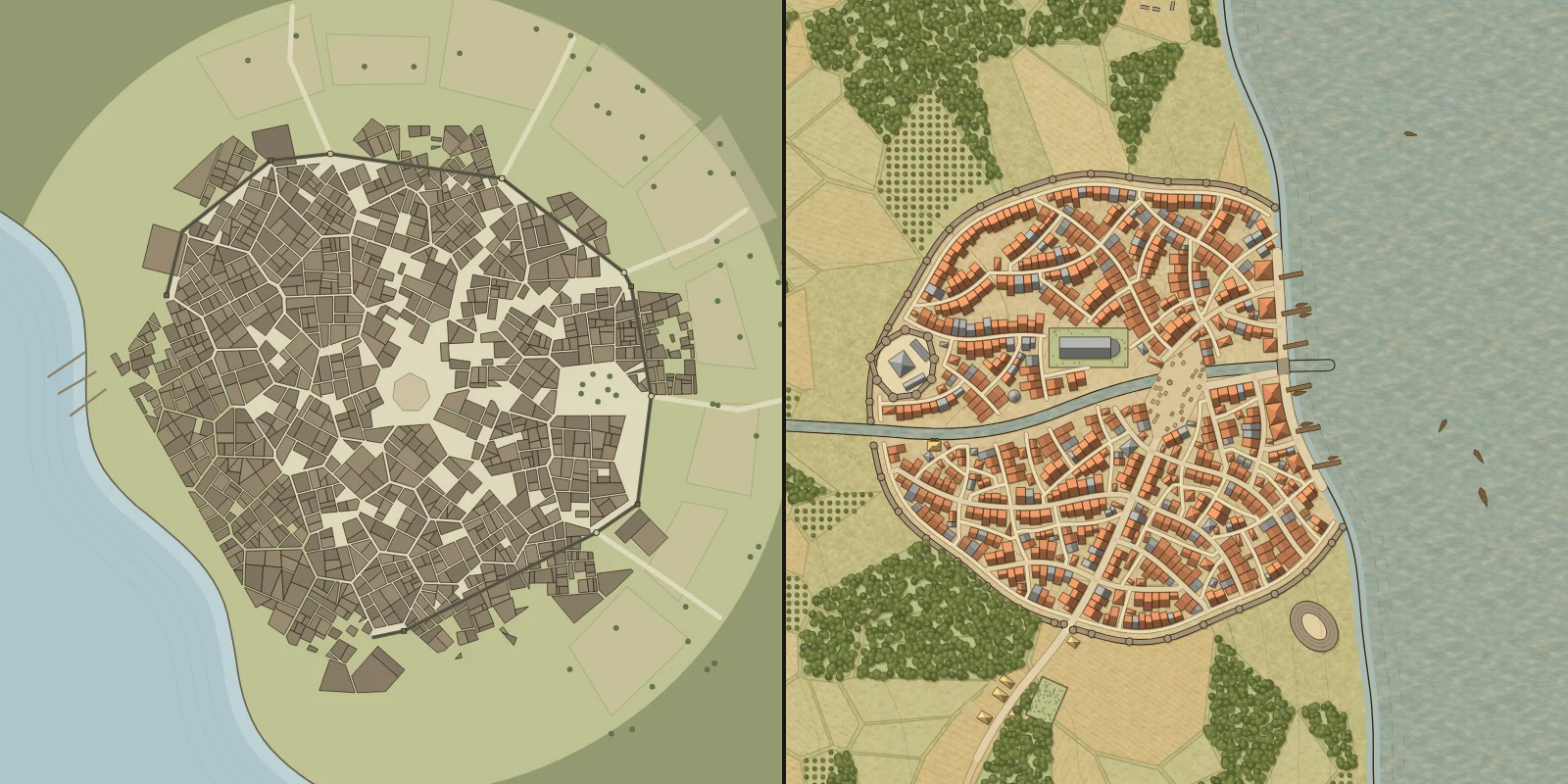
Built by the people who live there
A town is built in the way of its region's people. There are eleven styles, from timber-and-plaster terraces under clay roofs to longhouses behind a palisade, flat-roofed courtyard houses round a medina, walled compounds on a grid, and felt yurts round the horse lines.
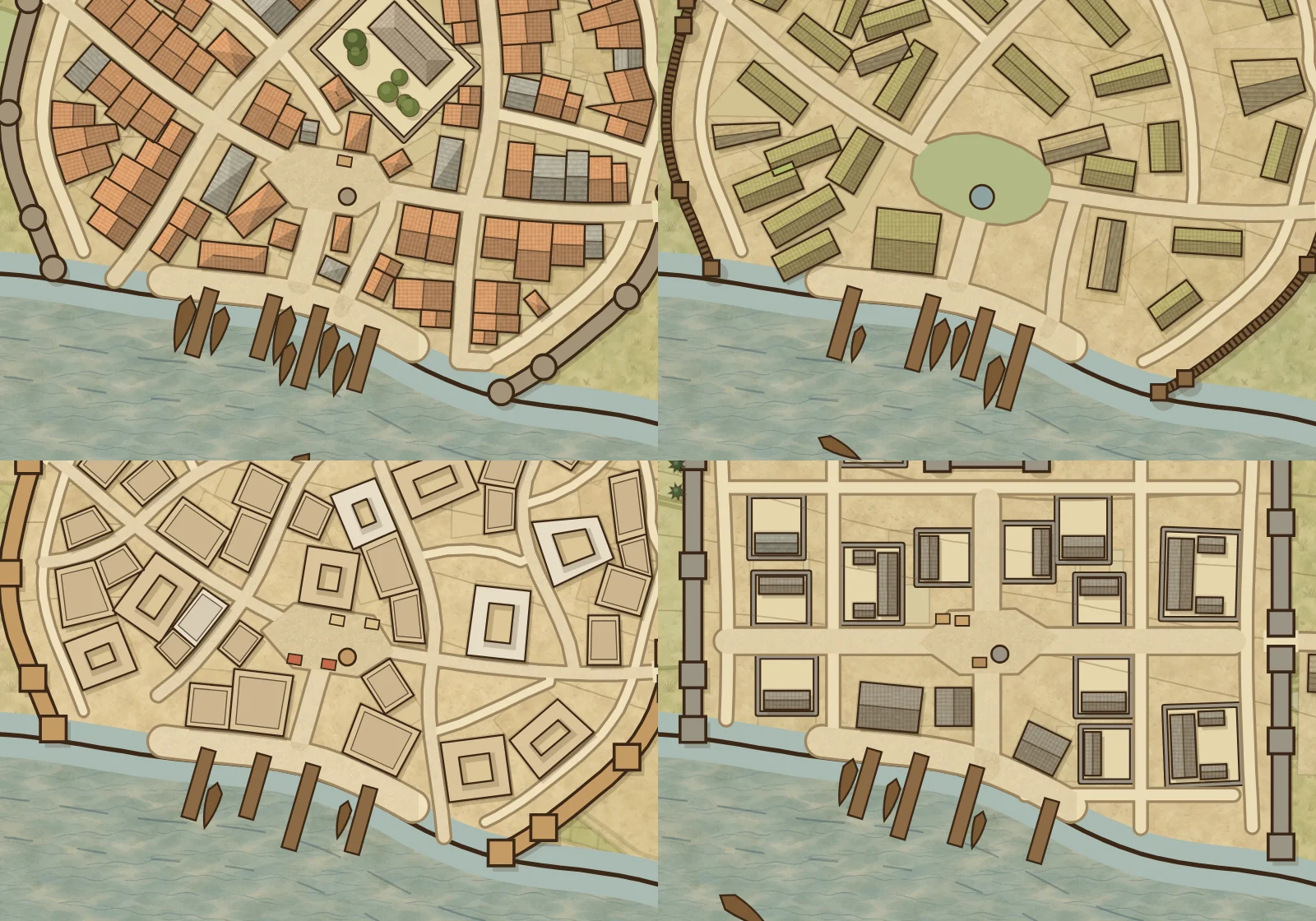
More places to find
Towns used to have the same handful of places. Now a town can have up to two dozen, from 27 kinds: smithies, stables, apothecaries, guildhalls, mills, shipyards, shrines, graveyards, barracks, manors, libraries, mage's towers, arenas, bathhouses, lighthouses, forts, watchtowers, old ruins and more. A capital's keep is its castle, named by the people who built it: a royal castle, a palace, a kasbah, a jarl's hold.
- What a town has depends on what it is. A port has docks, and the bigger ports a shipyard. A river town often has a watermill. A walled town has its gate, and the bigger ones barracks. A capital has the most of everything.
- Places start dark. A place lights up on your map once you find it. The Places list shows what you've found, and how many places are still out there.
- Their people are there when you arrive. The first time anyone steps inside one of the new places, the people who live and work there turn up.
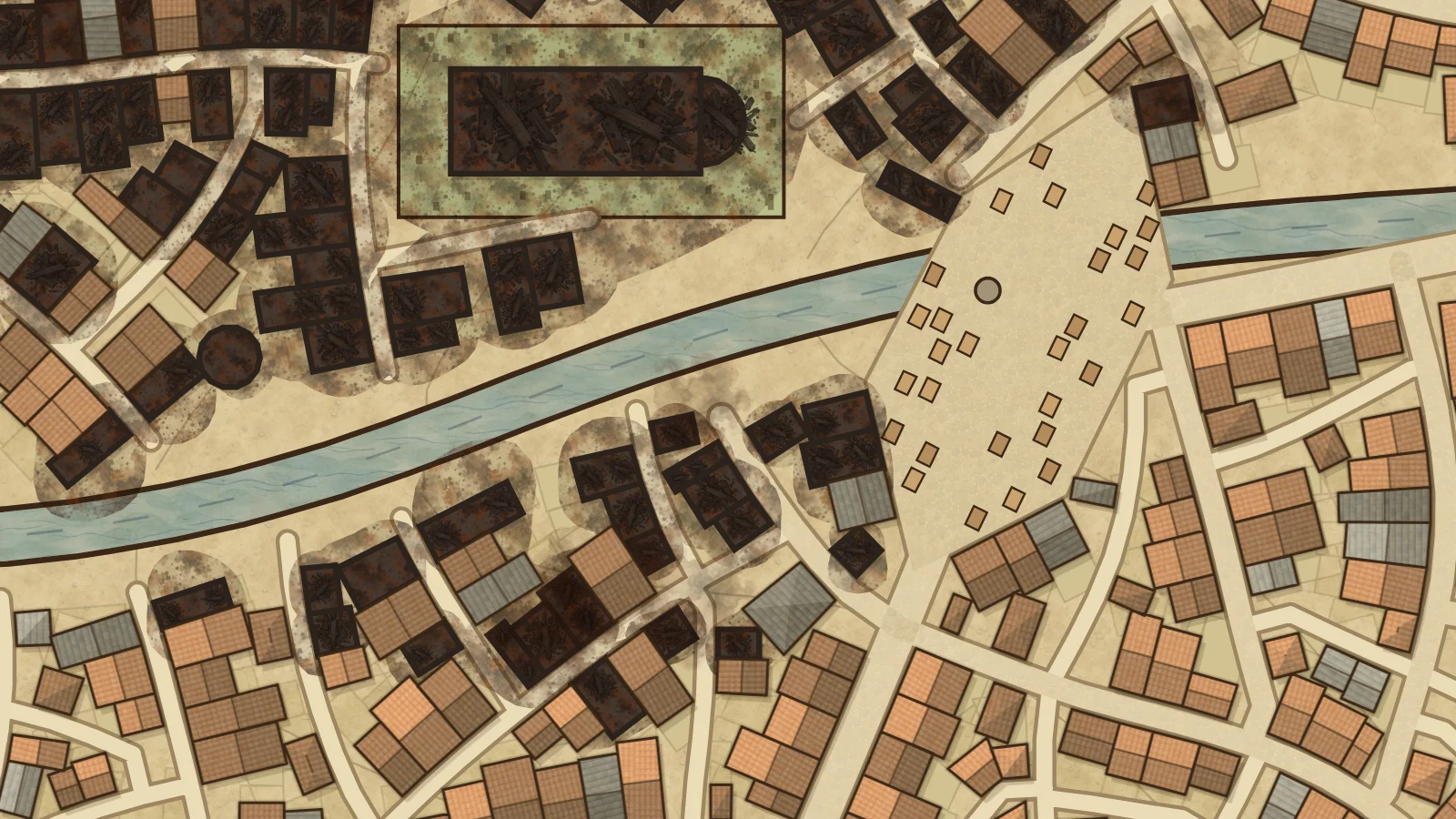
When the story wrecks a town
When a fight, a fire or a spell wrecks part of a town, the storyteller marks it on the map, on the place the story names and as far as the damage reached: one building, a block, a district, or the whole town.
- Burned: black shells on scorched ground. A fire that's only hours old is still burning.
- In ruins: roofless walls with weeds coming through.
- Rubble: smashed into heaps.
- Razed: nothing left but footings in the ash.
Walls can be breached and new gates cut, and wrecked buildings can be rebuilt. The map shows whatever has happened there since.
Smoother to look around
The map pans and zooms smoothly, even in the biggest capitals. Roof tiles come into view as you zoom in.
The 3D town view is gone for now.
For builders
Click a town on the Map tab of the Studio and choose Edit capital (or Edit city, Edit town…) to open the town editor. It shows the town as players will see it:
- Architecture: keep the region's style, or pick any of the eleven.
- Size: from Small to Mega, four times as wide as usual.
- Redraw the streets for a different layout.
- Its history: burn, ruin, smash, raze, rebuild, breach the walls or cut a gate, at a named place or anywhere you click.
Players find the town as you leave it. Whatever they do in play is added on top.