Oct 3, 2026worldmap
Places, Maps and Journeys
Tap a place in the story to see it on the map, read a town's card before you go, and journeys now take the time they should.
The world now keeps track of where everything is: every town, landmark and room, and where your character actually stands. Place names in the story are clickable, the map tells you about a town instead of showing numbers, and a journey takes the time it should.
Places in the story
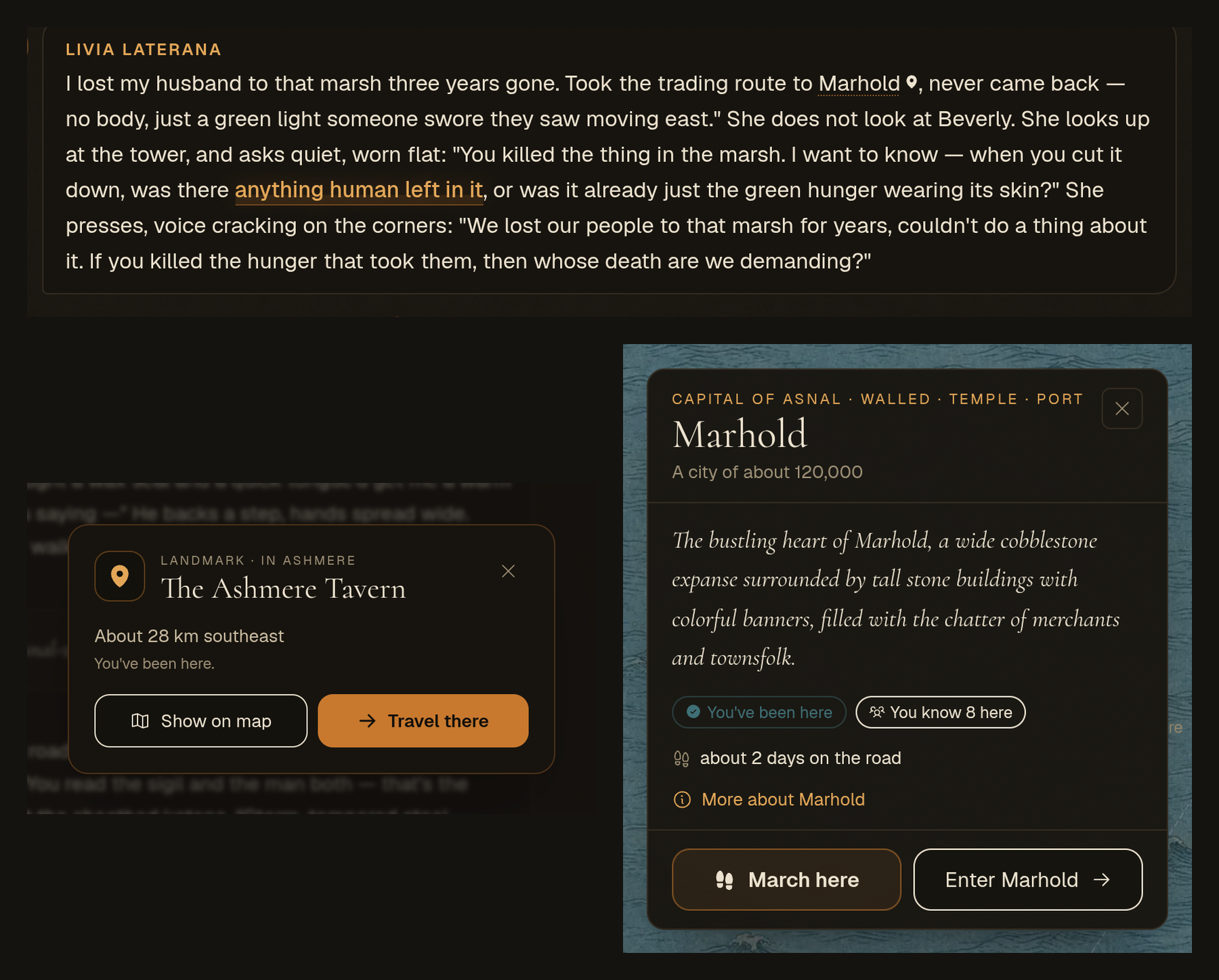
- Tap a place name. When the narration or an NPC names a town, landmark, region or room you've discovered, it's underlined with a small pin. Tap it to see what it is (a capital, a port town, a landmark in Ashmere), how far away it is and in which direction, and whether you've been there.
- Show on map opens the world map centred on the place, with a target on it. Tap the target to plan the march.
- Go there takes you straight in when the place is a short walk away. If it's further, it becomes Travel there and opens the march, so the days on the road are counted as usual.
- Places you haven't discovered yet stay plain text.
Town cards on the map
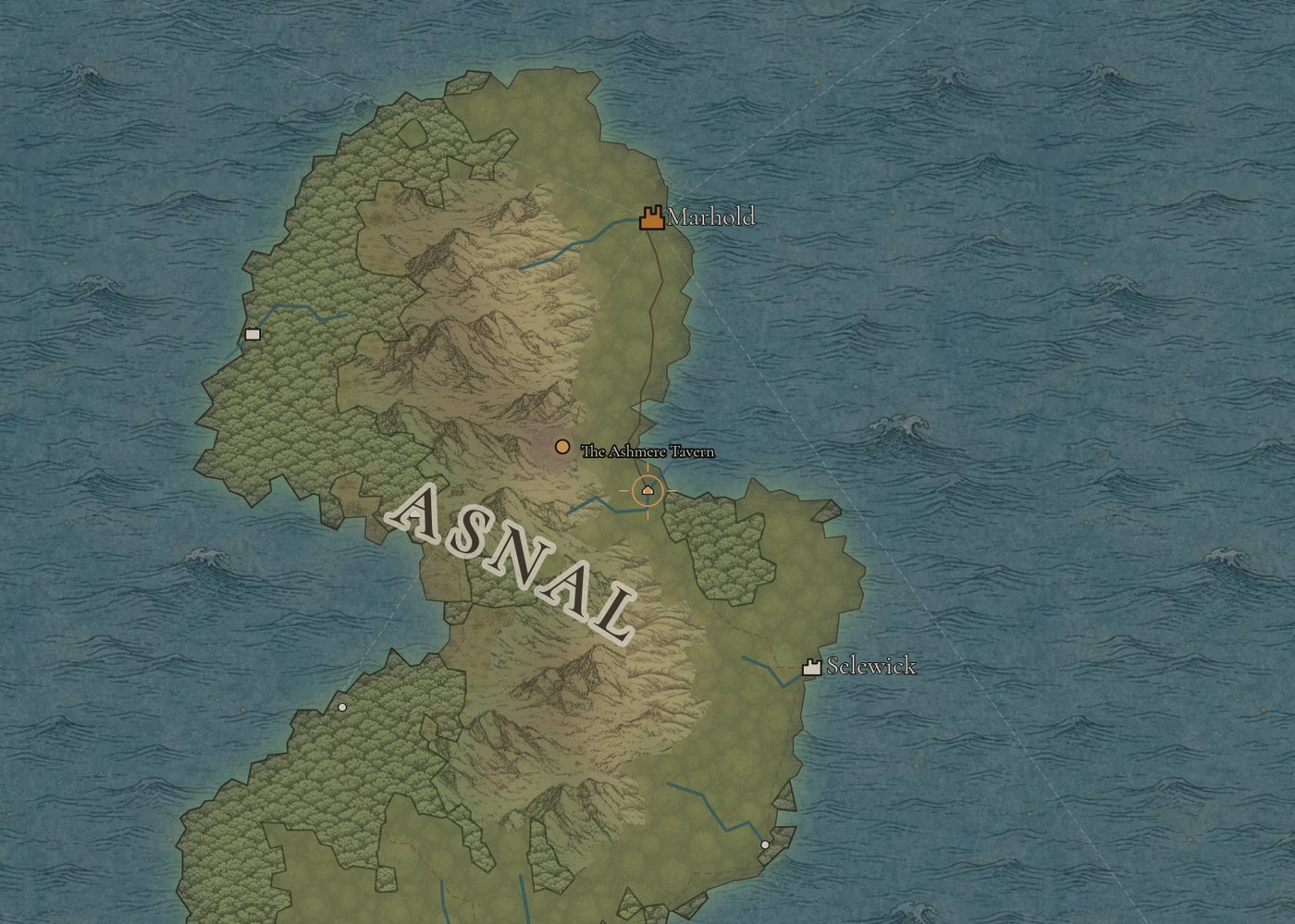
- Tapping a town now shows what it is (Capital of Asnal, walled, temple, port), roughly how many people live there, a taste of its lore, whether you've been, the price level, how many people you know there, quests that lead there, and how long the road is from where your party stands.
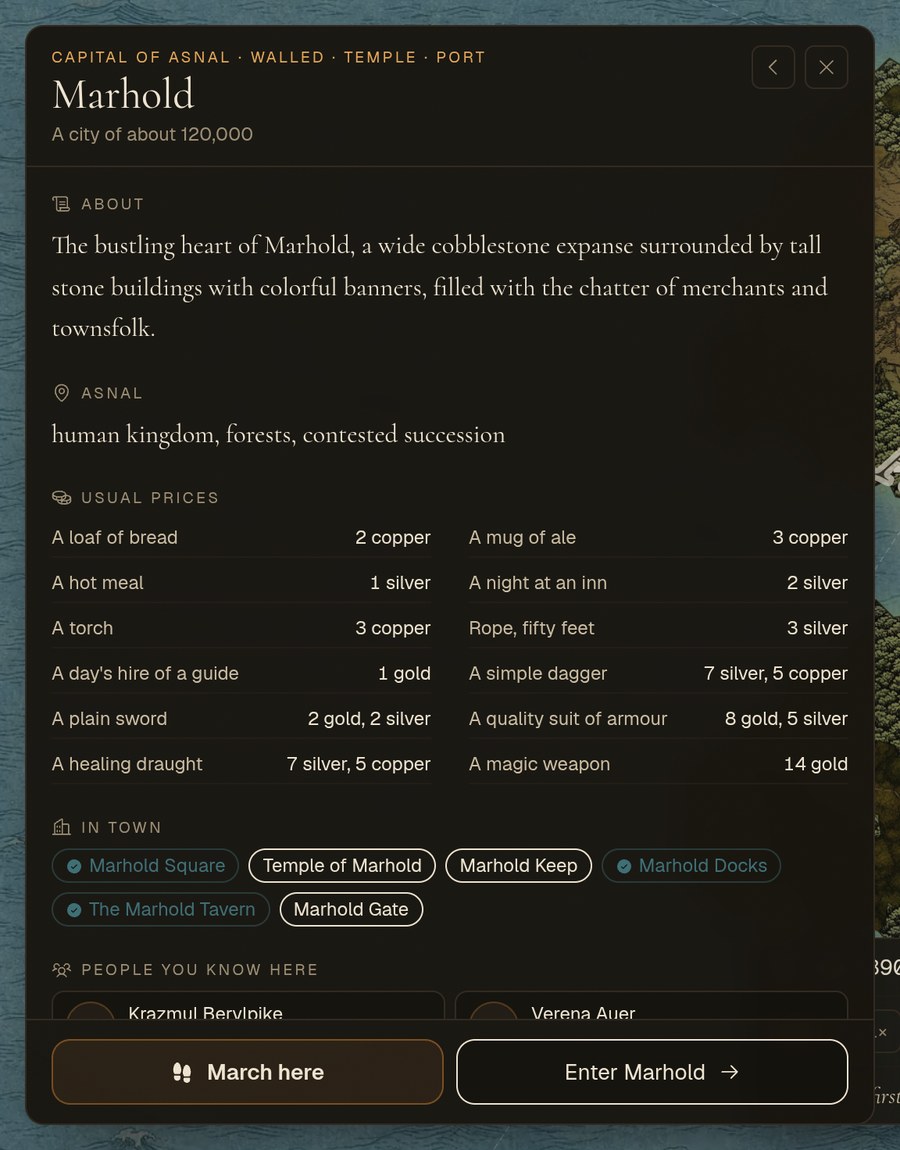
- More about… opens everything: the town and region lore, the local price list, its landmarks (ticked where you've been), the people you know there, your quests, what has happened there lately, who else is there right now, and every road and sea lane out of town.
- Charted places (caves, camps, wrecks and the like) show their own description when you tap them.
You act where you are
- Your character has one place in the world. You can open any room to watch what's happening there, but to act in it you have to be there. If you're somewhere else, the room shows who is where and a Travel here button.
- Typed instead of stepping through? If a scene opened a way into the next room and you write your next action without tapping "Step into…", the turn happens in the room you went to, where it belongs.
- Walking the map, sailing and stepping off a ship all count. Arrive anywhere the honest way and you can act there straight away.

Journeys take time
- Travel in the story is never refused, but it costs days. Walk to a town 120 km away and about three days pass; the story says so. Ride, and it's quicker.
- How you travel matters, if you can really do it. A storm-school mage can ride the winds and arrive in hours, and so can a character with a flying companion. Claim a horse you don't own and you're walking.
- You can be sent to towns and landmarks you've never visited. "I head for Kawick" now finds Kawick, even if you've only seen it on the map.
Fewer duplicates
- The world no longer makes a second "Marhold Square" next to the real one, or a new cellar each time you go back down to the old one. Asking for a place that already exists takes you to it.
Fixes
- Sea passages cost what the crossing is really worth.
- Only the person who booked a voyage can sail it on.
- When a voyage ends, your character is properly ashore at the port.
- Resting on the road needs actual travel.
- The name and description of a room come from the world, never from the page address.