
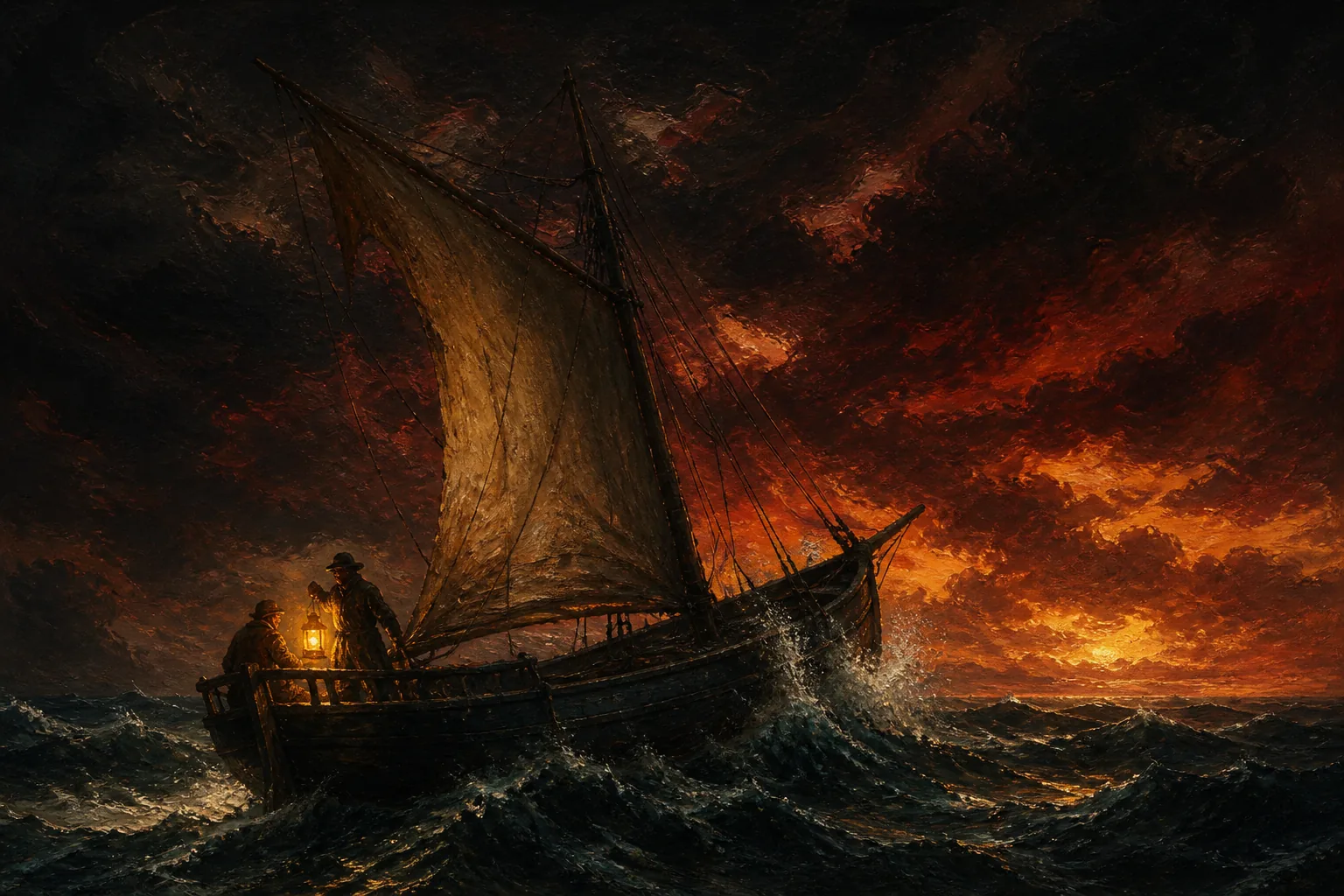
Sea voyages
Buy passage between ports. You pay in coin, in days, and in risk. Storms and pirates are the ordinary problems out there.
Worldtable · fantasy worlds you build, then play by typing
An AI plays every innkeeper, bandit and rival you wrote. It never gets to touch the dice.
Shape the land, write its peoples, magic and villains, and pick the rules in plain words. Then invite your players, or walk in yourself. You type what your character does and the world answers in the voice you gave it, while ordinary game code keeps the map, the wounds and the money.
Free to build · Runs in a browser · Players never pay
14
shapes of land, or your own drawing
6
questions to a first draft
20
rules the engine enforces
23
naming styles
55
actions the world can take
If you think AI games are slop
Most AI games fall apart the same way. Nothing stays true for more than a paragraph. The tavern moves, the wound quietly heals, the villain forgets who you are. Worldtable solves that with boring old software. There's a simulation running underneath and the language model sits on top of it, describing what happens. It doesn't get a vote.
Coastlines, rivers, biomes, roads and every town are generated from the land the builder shaped, then held by the engine. The narrator can't move the tavern or shorten the road to bail you out. When it sends you somewhere, it's a place on that map, three days' ride down a road that's also already there.
Your injuries, your coin, your inventory, your titles and what every NPC privately thinks of you are all rows in a database, not vibes floating around in a prompt. Close the tab for a month and come back. The innkeeper still remembers the tab you never paid.
How far you got today, what a crossing costs, how hard you hit and how badly it went wrong are all computed, not narrated. The model reads your intent and grades it. The arithmetic happens somewhere it can't reach.
Combat
The game's own battle map, playing a scripted turn in your browser. No AI was asked.
You describe what you're doing. Feint low, put your shoulder through the door, throw everything into one strike. The engine reads it for tactics and risk, then it rolls. Effort is a currency you spend, so hitting harder leaves you with less in the tank when things go badly.
Fight on your own and it plays out on a map. Enemies announce their blows before they land, so stepping out of the way works. Shove someone into a shelf and the shelf breaks. Fire leaves the ground burning. Where everyone stands and what every blow did is worked out by the engine before the narrator writes a word.
CRITICAL
1.4×
GLANCING
0.5×
BACKFIRE
0.0×
Three of the outcomes the engine can hand back. It isn't rooting for you.
You build it
Sooner or later every AI storyteller forgets or bends what you wrote. In the World Studio the parts that matter aren't left to it. The map, each people's limits, the cast, the rules and the money are data the engine holds, and the storyteller has to work inside them.
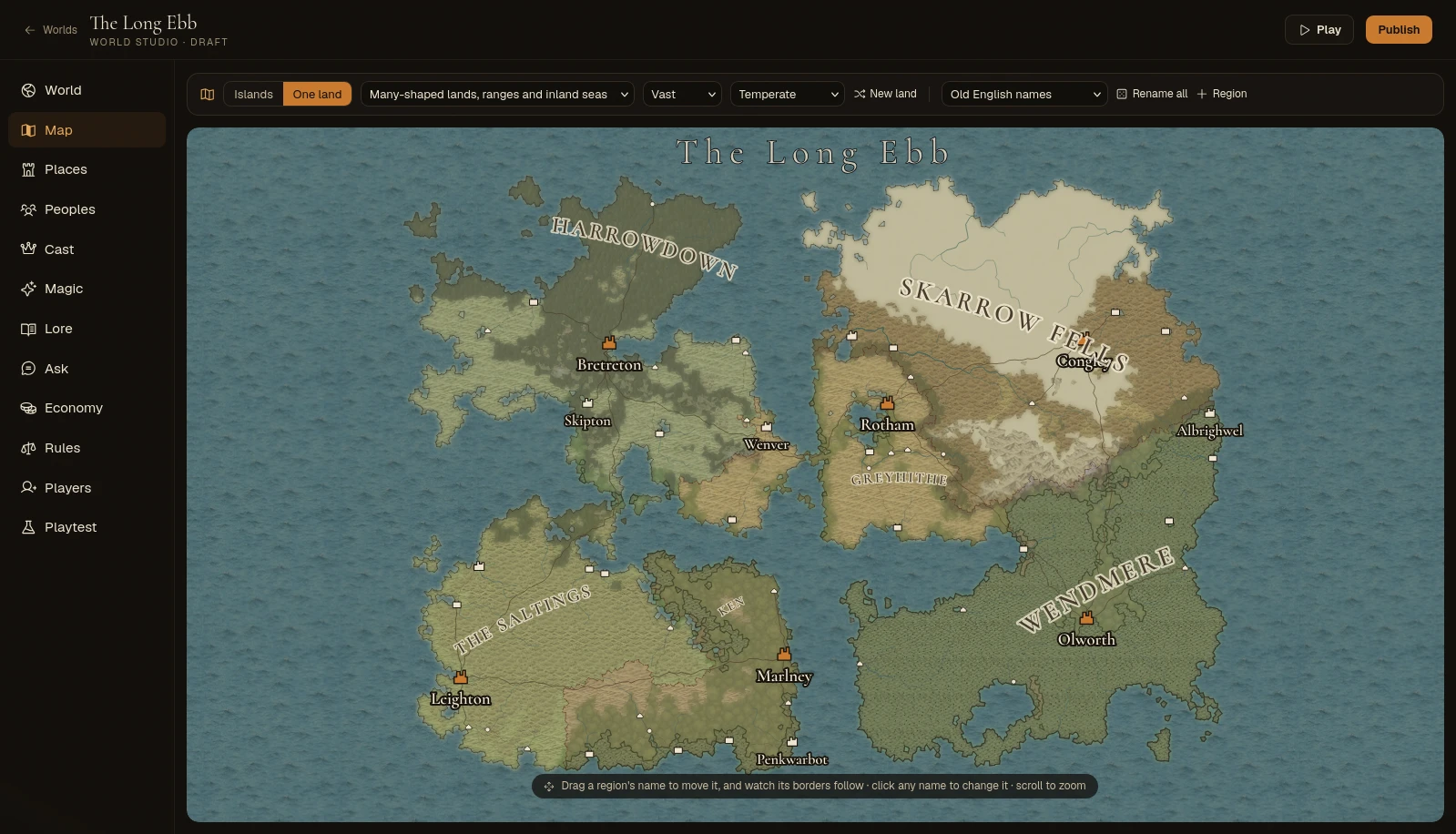
Pick one of fourteen shapes or draw your own coastline. The generator raises the terrain, runs the rivers, lays the roads and founds the towns. Drag a region's name and its borders regrow as you move.
Say what the world is about and how it should feel, and Worldtable drafts the premise, regions, peoples, magic, a cast of rulers and villains, lore and its own money in a minute or two. Then edit it line by line.
When a hero falls: they die for good, or they're beaten and wake later. The most dangerous thing the world may bring. How many companions can follow one hero. Pick them in plain words, and the engine holds the storyteller to them.
Your players live in it
Players make a character in your world, type what they do, and the world writes back. Here's what's keeping score underneath.
The chart
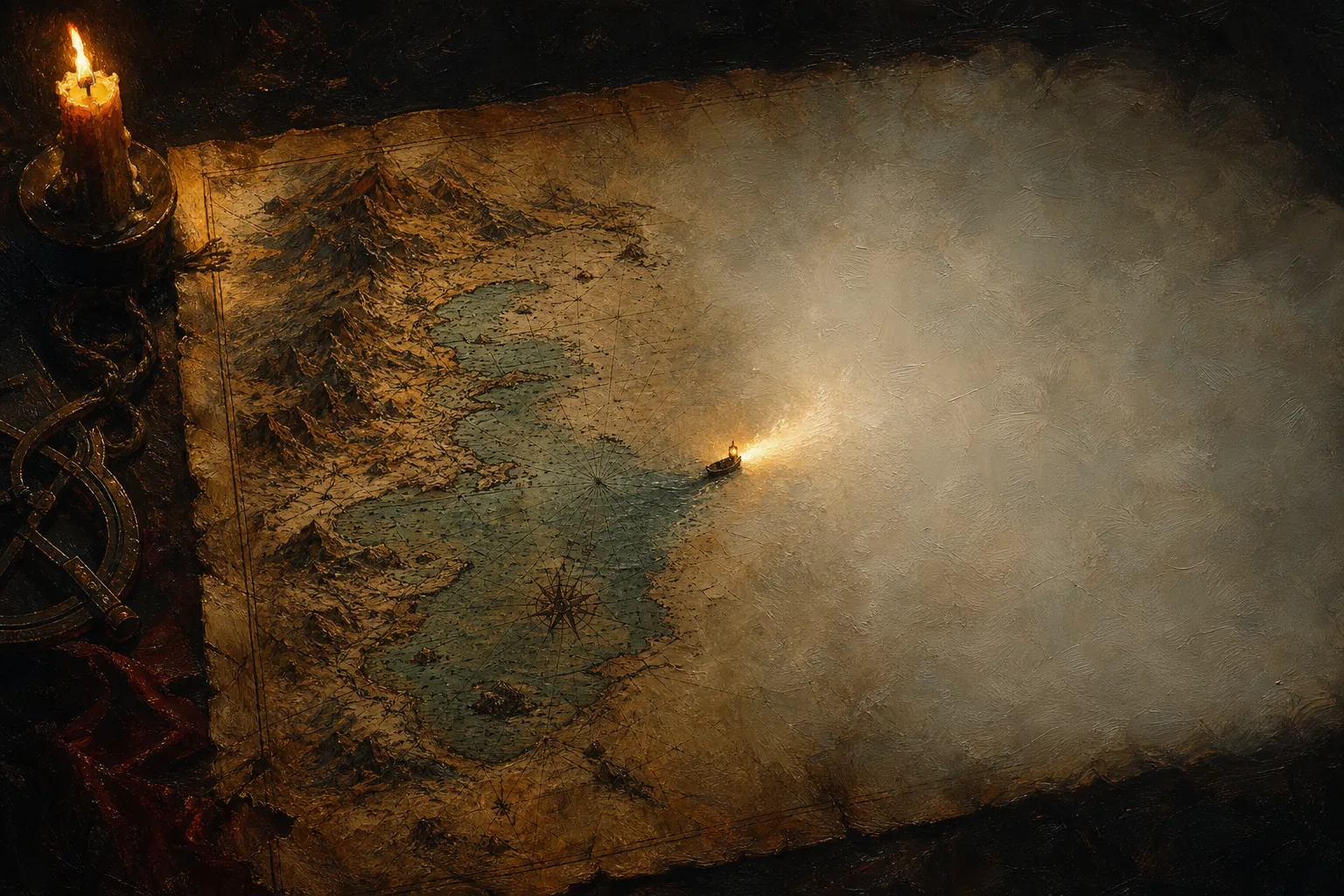
The map isn't a level select. The whole world is on it from day one, every town named, so you can plan a route three regions away. Underneath, the game keeps track of exactly where your character has been. Switch on the Fog layer and the chart shows only that: the roads you've walked, the coasts you've sailed, and unnamed shapes everywhere else.
Which makes the map a record too. Put the fog on after a few weeks and you can see where you've been, what you went around, and the dark stretch of coast you still haven't worked up to.
The road
You don't teleport between scenes. You pick a place on the chart and your party walks, and the walking takes days that actually pass: the clock runs, prices move, and the trouble you left behind you keeps developing while you're out of the room.
Nothing about that is a fixed number. Your speed is whatever falls out of the ground under you, the road if there is one, how many animals you have, how much you're carrying, and the hour. Take the mountain shortcut and you'll find out why nobody uses it.
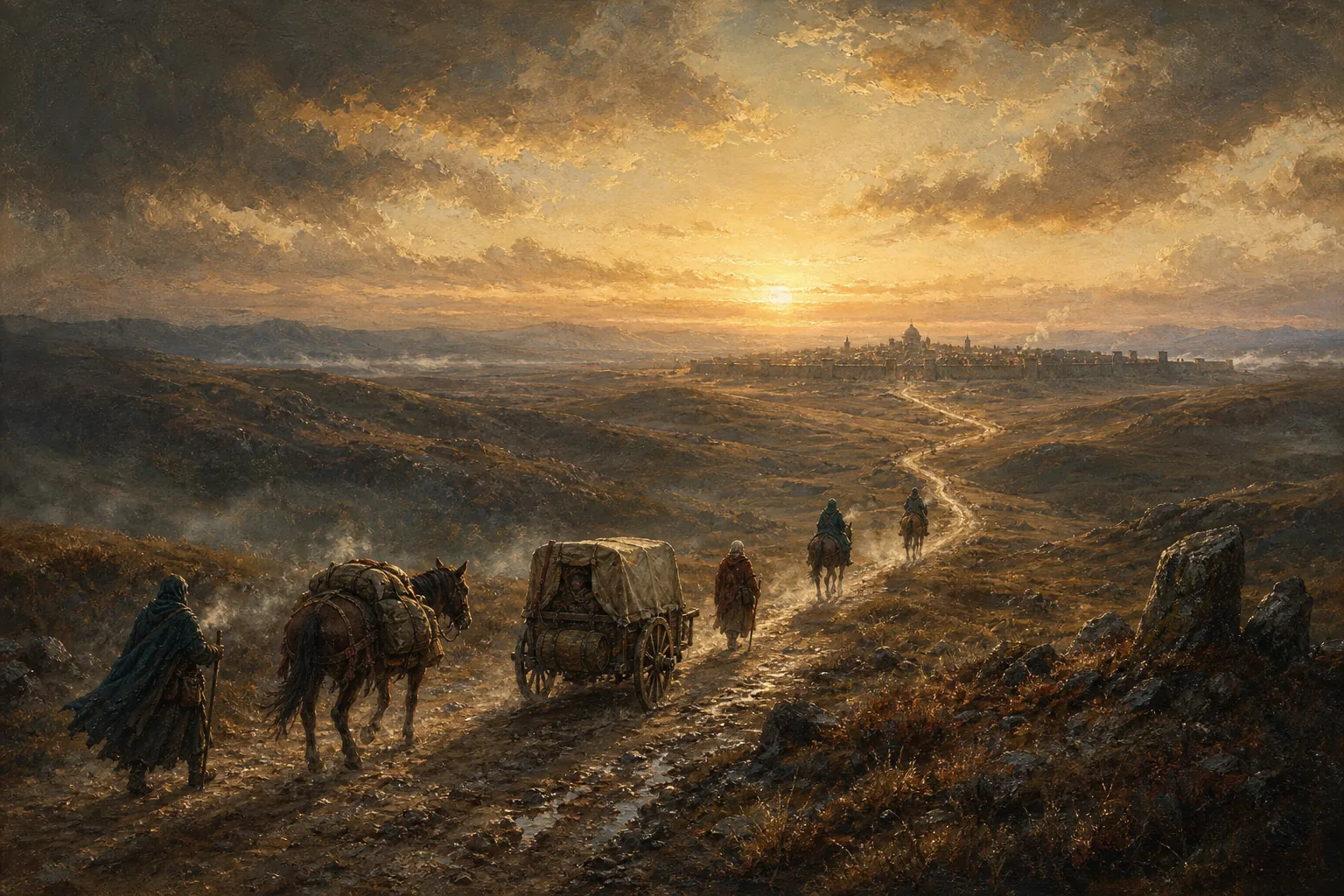
Real constants out of the travel code. Speed is never stored on your character; it's recomputed for the ground you're standing on.
The people
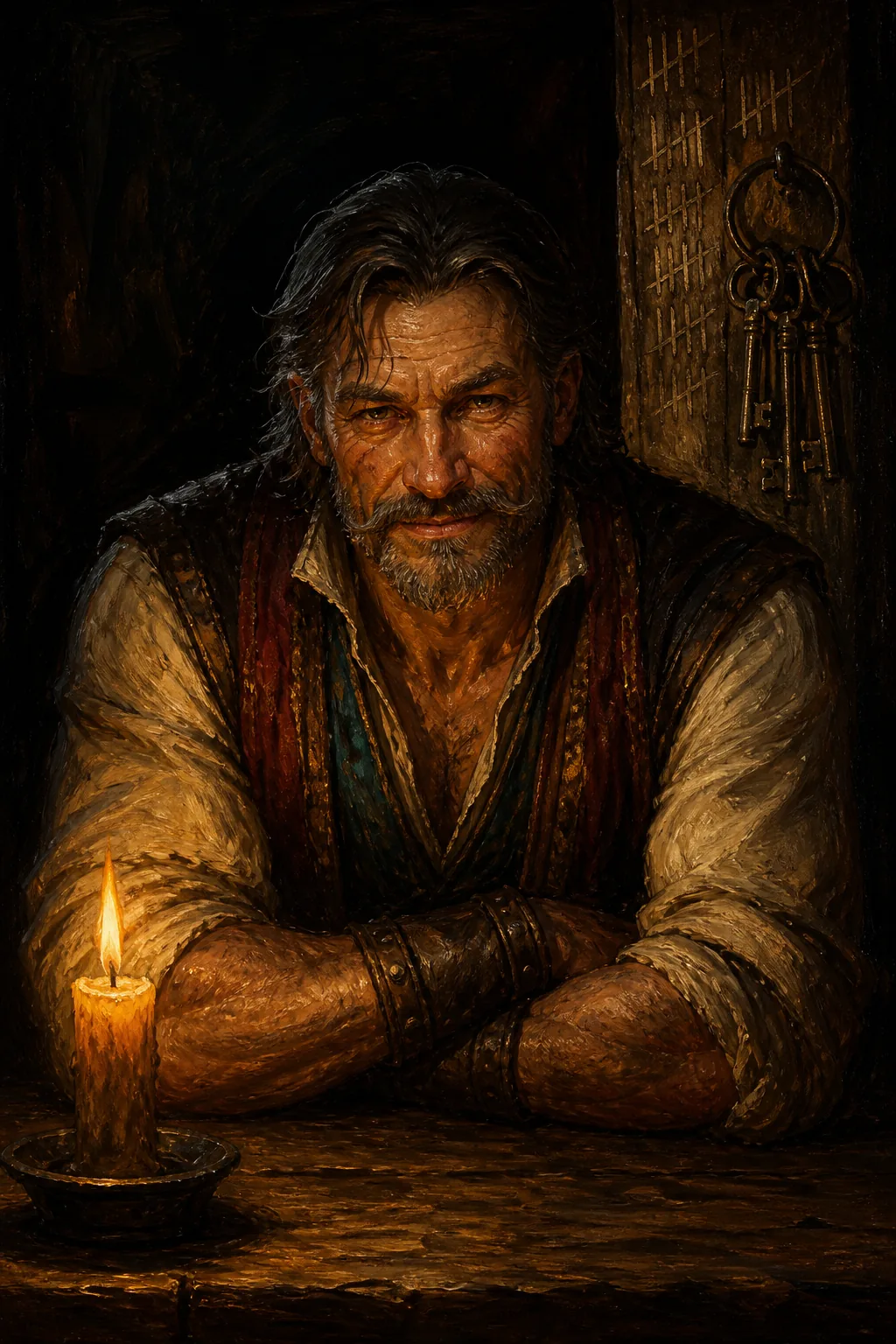
Every named character keeps a file on you: what you did in front of them, what they heard about you from somebody else, and where you stand with them: how far they trust you, how warm they are, how much they'd like you gone. You can open anyone's page and read the lot back. Their memories of you, in their own words, with dates on them.
“You paid for the boy's passage and never said whose son he was. I have not forgotten that, and neither has his mother.”
That's an NPC memory. The engine keeps them per character and feeds them back in every time that person shows up in a scene.
Consequence
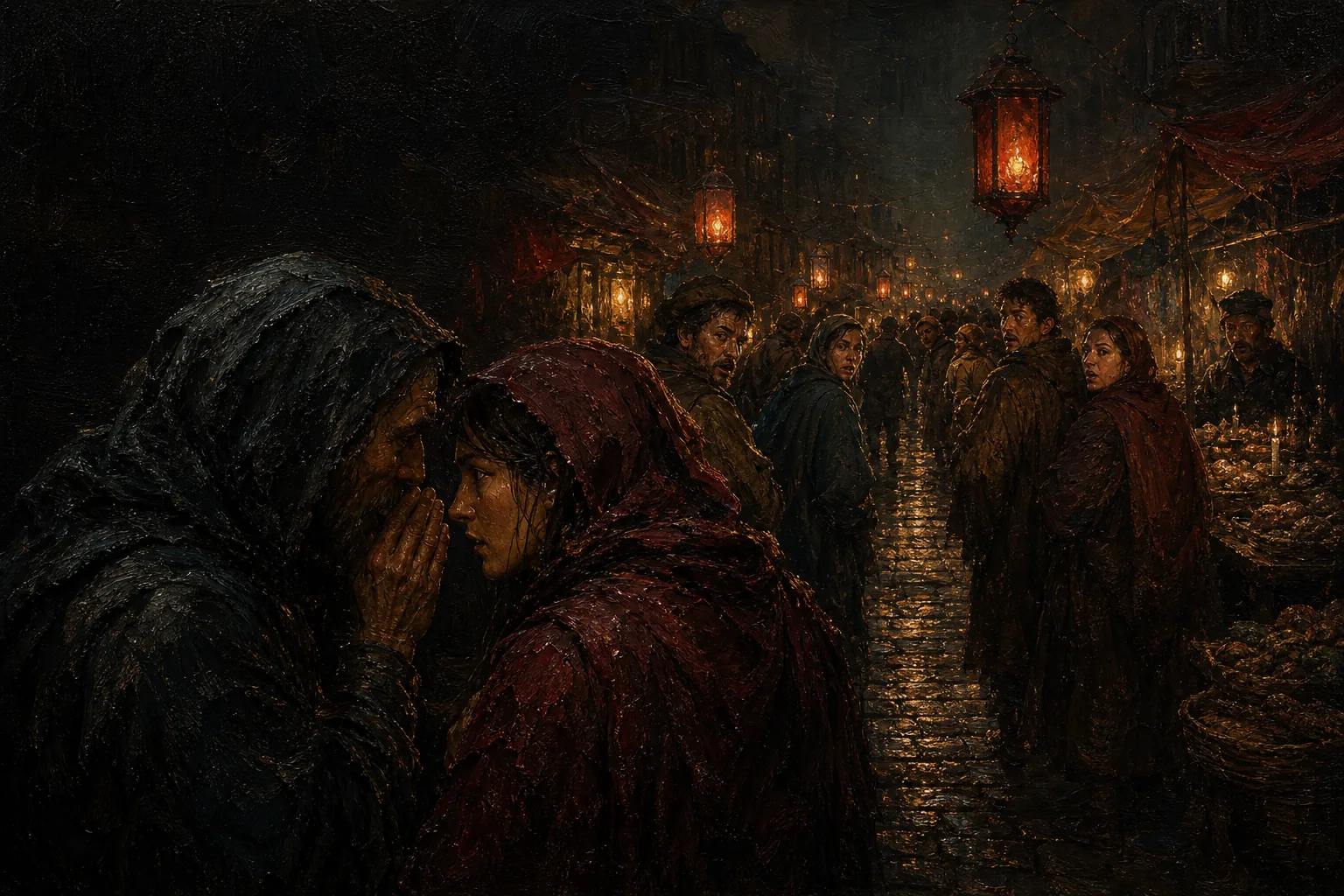
Do something loud enough and a timer starts. Some in-game days later, depending on how bad it was, the story turns up in a town you aren't in, and it's grown in the retelling. Strangers start calling you by a title you never picked. Some doors open because of it and some are shut before you get near them.
You don't choose your title. The world decides when you've got one.
For solo roleplayers
If you've ever built a character you never got to play because five adults couldn't agree on an evening, this is for you. The table is open at two in the morning. Take one turn on your phone while you're queuing for coffee, or lose four hours to a single conversation with a stranger in a bar. The world will wait for you.
Play in bursts
Turns run in the background, so you can close the tab mid-scene.
Install it
Add it to your home screen and it runs like any other app.
Or don't
Rooms are shared. You can walk into a town and find someone already there.
Afterwards
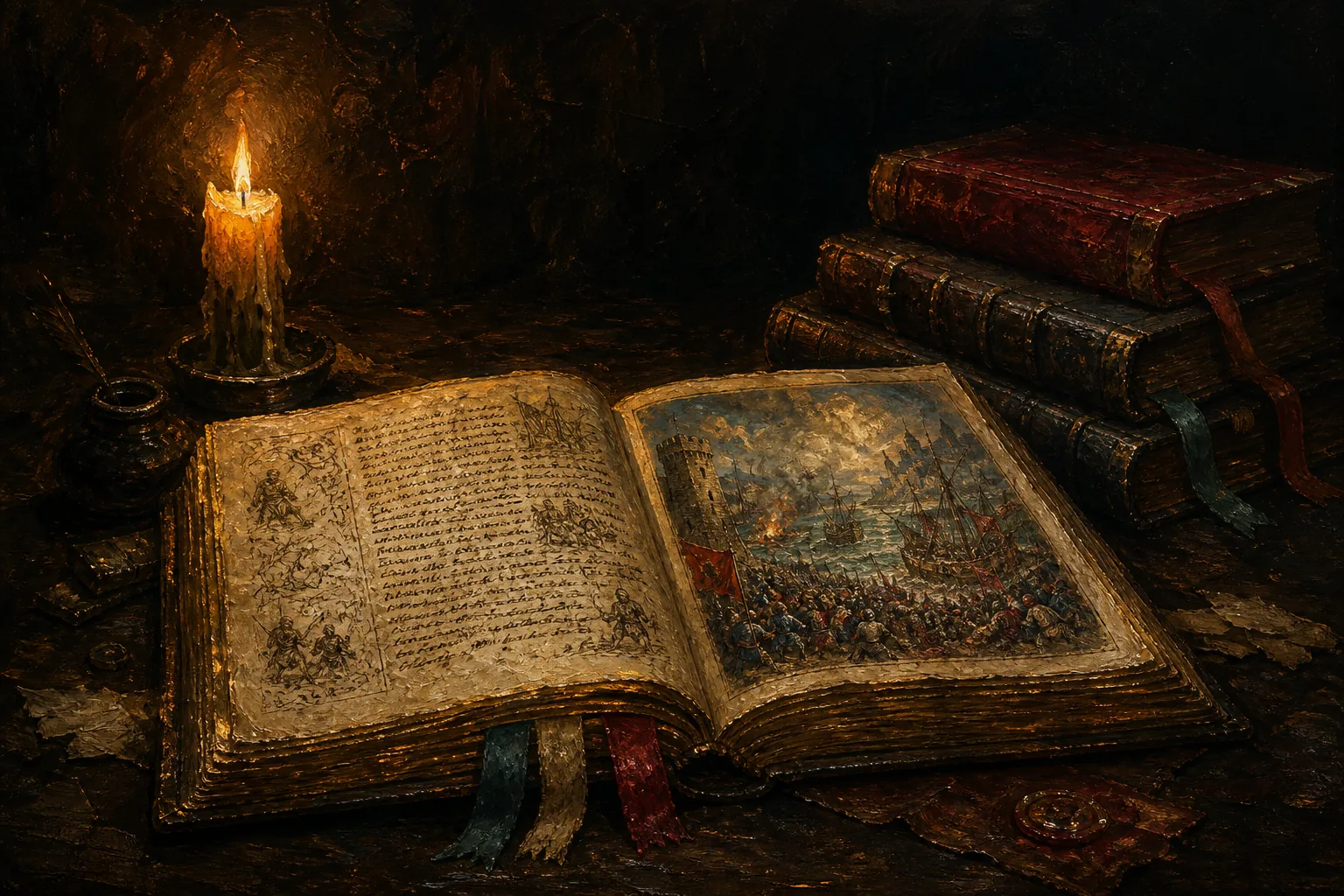
As word of what you did gets around, a chronicler writes it up as proper chapters in the world's voice rather than a bullet-point summary. They get bound into a book you can sit down and read, with painted plates from the moments that deserved one, in worlds that have pictures switched on. Older chapters fold down into a prologue instead of disappearing.
The book counts as canon. The AI reads it back before every scene, so chapter nine knows what you got up to in chapter two.
And also
Buy passage between ports. You pay in coin, in days, and in risk. Storms and pirates are the ordinary problems out there.
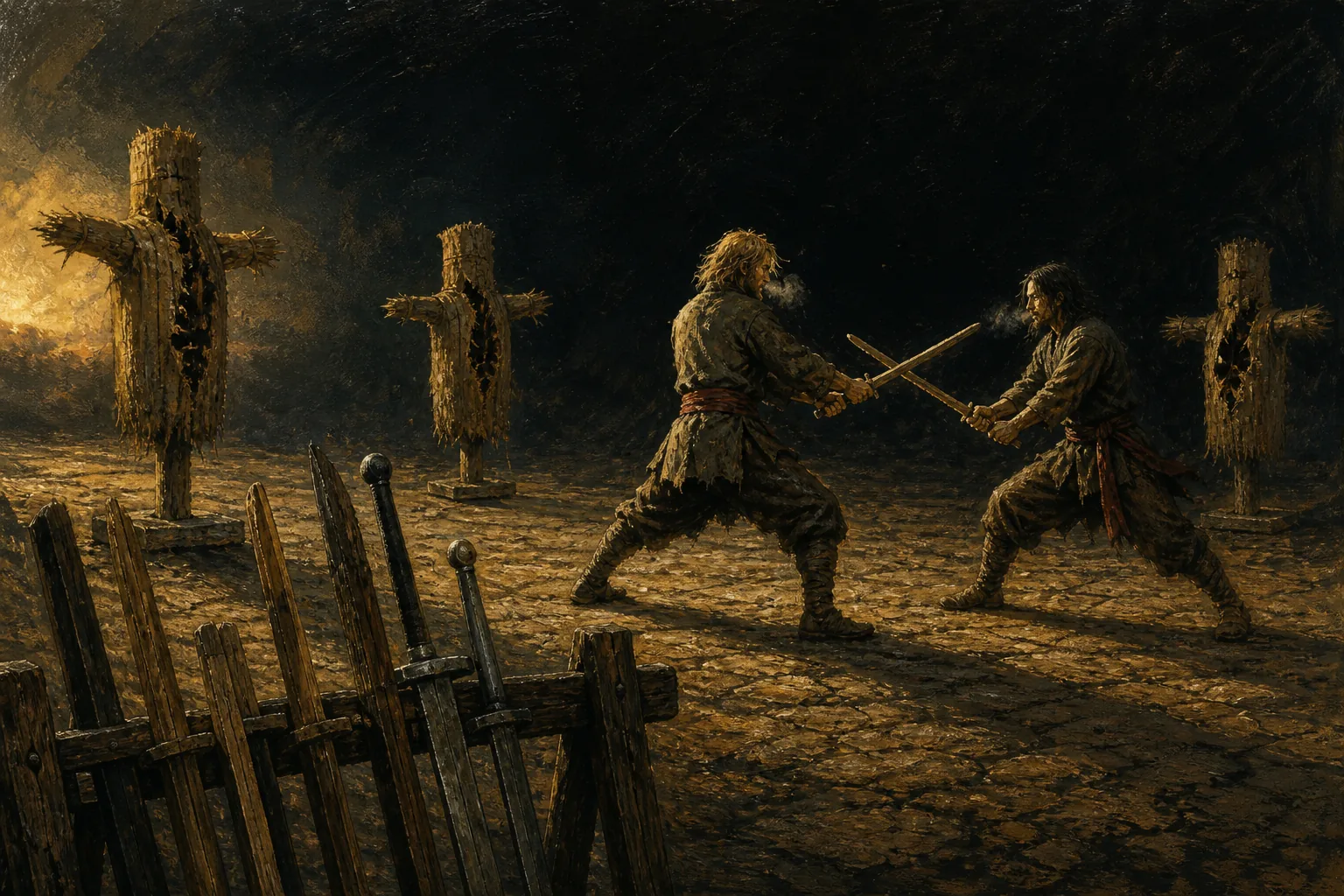
Your skills get built around who your character actually is, then you go and earn them in the yard. It's not a shop menu.

Bring materials to a bench and describe what you're trying to make. It gets judged on its merits instead of looked up in a table. A bad idea can still cost you the materials.
Lore you dig up gets written into a codex that only you have read.
Where their people allow it, and only under real pressure, a character can break past their limits.
Regions have situations moving before you arrive, and the first one to find you comes out of your backstory.
Commit to a voyage into uncharted water and watch how it goes.
Straight answers
The page is blank
Six questions get you a drafted world in a minute or two: land, peoples, magic, a cast and a coin. Change what you like, make a character, and you're standing in a real town on your own map with a road leading out of it.