
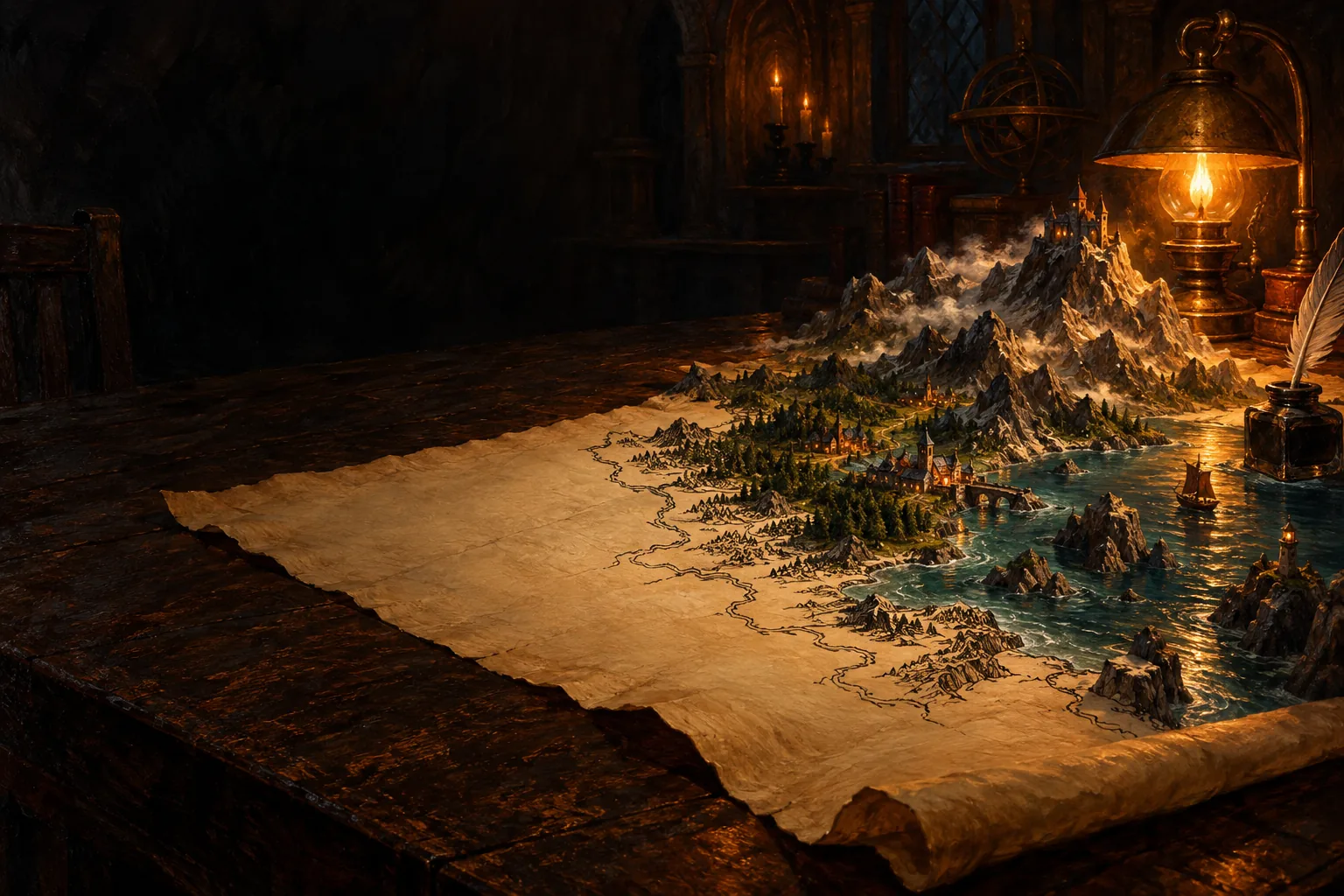
The World Studio · for world builders
You build the world.
It keeps score.
An AI storyteller runs every scene in it. Your map, your peoples and your rules are held by the engine, not left to its memory.
Shape a continent and name its towns. Write the peoples, the magic, the powers and their secrets, then pick how hard the world should be. Invite your own table. Worldtable plays every innkeeper, rival and villain, and it plays them the way you wrote them.
Your world · your players · first $1 of AI on us
Open to everyone: sign in, name a world, and you're in the Studio.
14
shapes of land, or your own drawing
23
naming styles
12
scales of magic, in your words
20
rules the engine enforces
20
earlier versions kept
The map
Start with land you can walk across.
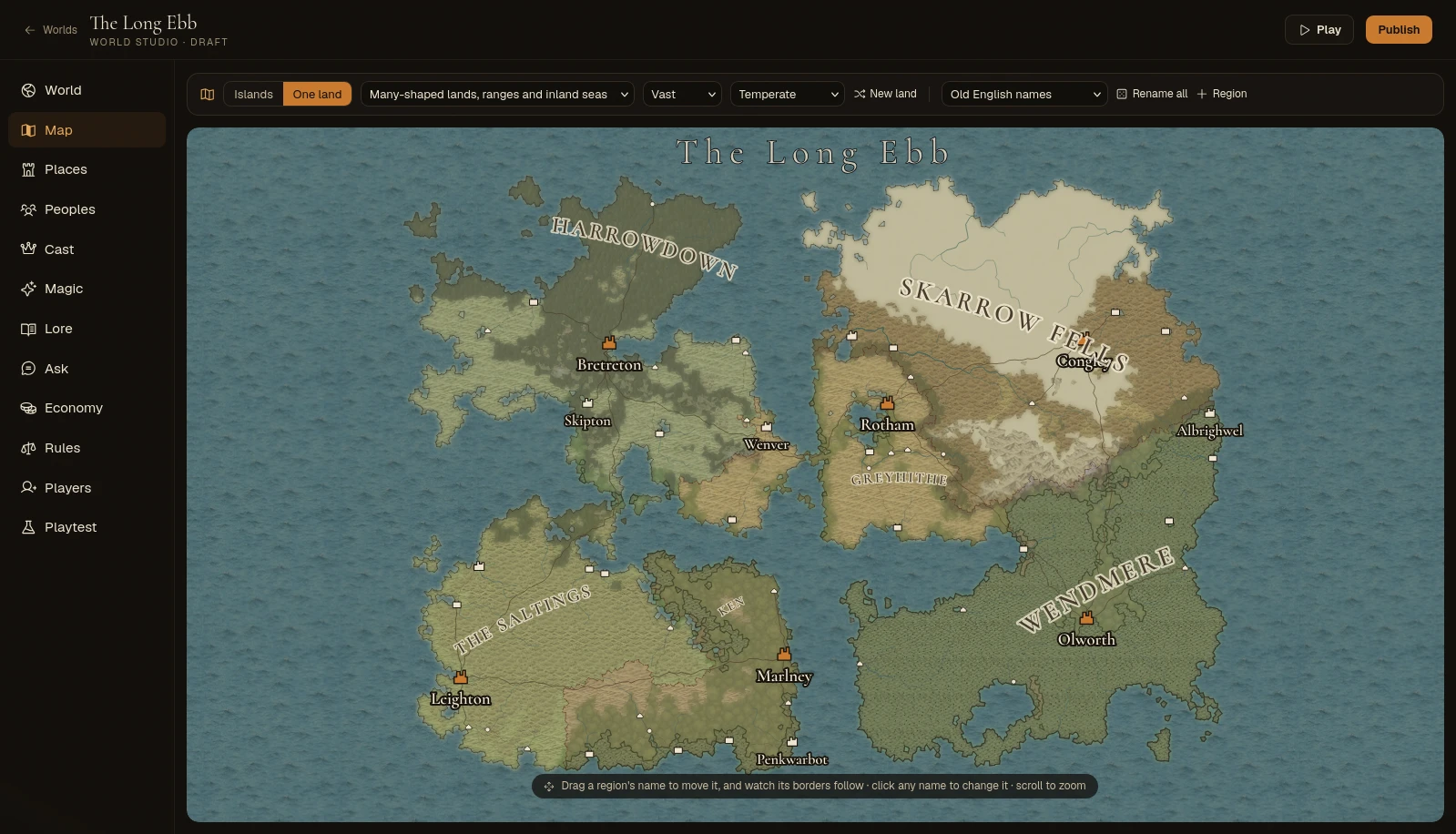
The map is the centre of the Studio. Pick a shape, or rough out a coastline yourself, and the generator raises the terrain, runs the rivers, lays the roads and founds the towns. It isn't a picture. Players travel it kilometre by kilometre, and the storyteller can only send them to places that are really on it.
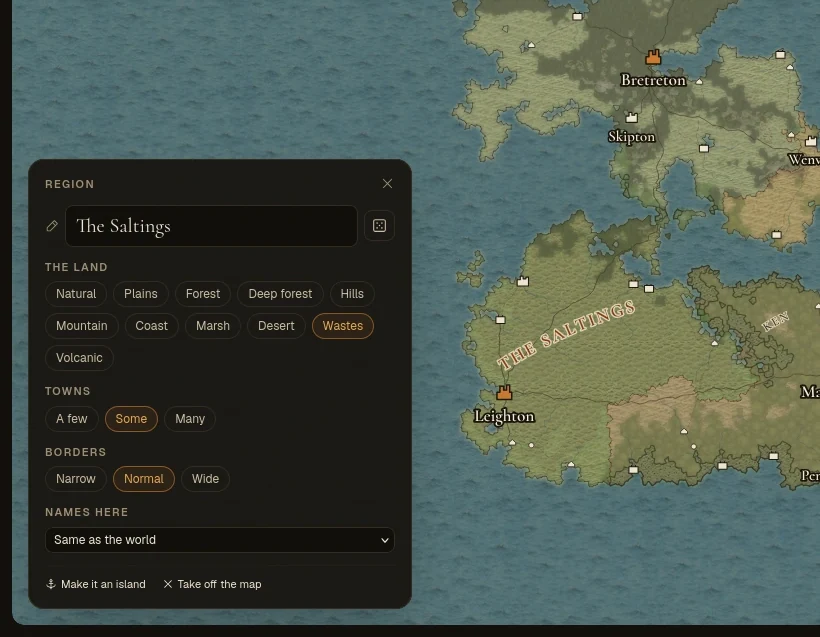
Words, not numbers.
Click a region and you choose what it is like, not a set of sliders. The land is Wastes or Marsh or Deep forest. Towns are A few, Some or Many. Borders are Narrow, Normal or Wide.
- Drag a region's name across the map and watch its borders regrow as you move. Nothing else shifts when you let go.
- Click any name to rename it, or roll a new one in one of 23 naming styles, from Old English and Nordic to Desert, Elven and Draconic.
- One landmass, a scatter of islands, or both. Fourteen shapes, or your own drawing in sea, land, hills and mountains.
- Put gates to other realms in any region, sealed or open.
Start from a sentence
Six questions, then a whole world to edit.
Don't want to start from a blank page? Answer six questions and Worldtable drafts the whole world in a minute or two. Then it's yours to edit, line by line, and nothing is saved until you say “Use this world”.
- 1
What is your world about?
A sentence or two, and a genre.
- 2
How should it feel?
Grim, heroic, mysterious, political, eerie, hopeful…
- 3
The land
One land or islands, a shape, and how many regions.
- 4
Peoples and magic
Mostly humans or many peoples; no magic, rare magic or magic everywhere.
- 5
How do places sound?
The naming style for every region and town.
- 6
Anything else?
Notes, in your own words.
What comes back
- A premise, a tone and the event history hangs on
- Regions with their hooks, histories, factions and taboos
- Peoples, and where they live
- Magic, including anything forbidden
- Six to ten notable figures, rulers and villains
- Eight to twelve lore entries
- Its own money
- A map to put it all on
The model writes in words (a people is “strong”, a region “deadly”) and Worldtable turns those into the engine's numbers. Region names come from the naming style you picked, not from the model.
Every text box in the Studio also has a quiet helper: Flesh it out, Make it clearer, or Write one for me, with an undo.
Creating a world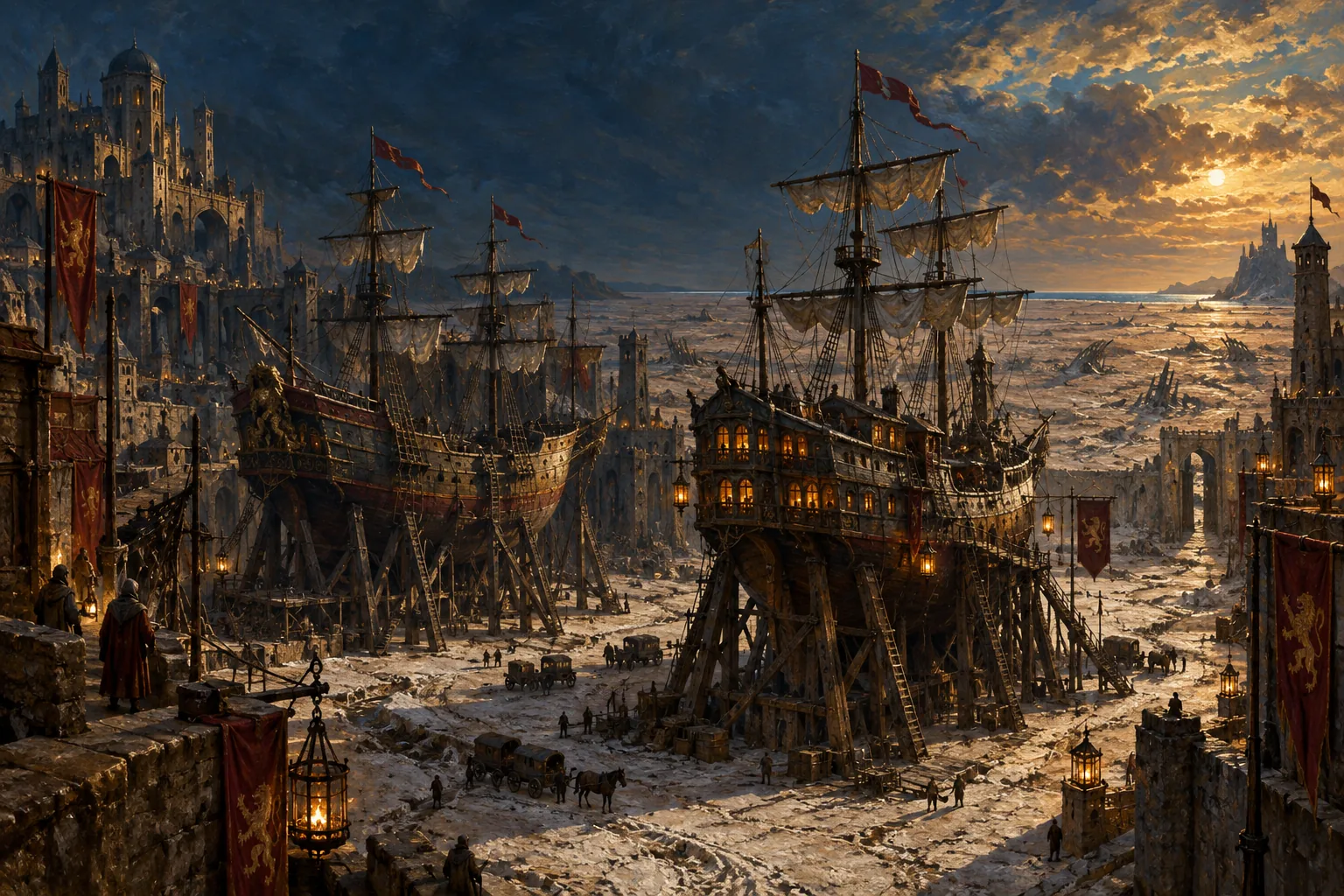
A world made in the Studio
The Long Ebb.
“Forty years ago the sea went out one morning and never came back. The drowned kingdoms of the old coast lie open under the sun, and everyone with a shovel, a sword or a prayer is walking out onto the seabed to claim them.”
Every Studio screenshot on this page is this world: six regions, three peoples, four kinds of tide magic (one of them hanged on sight), seven notable figures, ten lore entries, and its own money.
The Beached Crown
Greyhithe
A royal harbour whose fleet stands on timber stilts, thirty miles from any water.
The Open Floor
The Saltings
The dry seabed. Wrecks by the thousand, and the drowned dead walk at night.
The Last Water
Wendmere
Brackish lakes where the tide-priests keep a lamp lit for the sea's return.
The Landward Kingdom
Harrowdown
Sheep country grown rich on owning every road down to the seabed.
The Old Cliffs
Skarrow Fells
Sea caves a hundred feet up a dry cliff, sold by the Gullkin by the word.
The Hiding Wood
Brackenholt
A forest kept wet by the Drowned, who walked out of the sea after it.
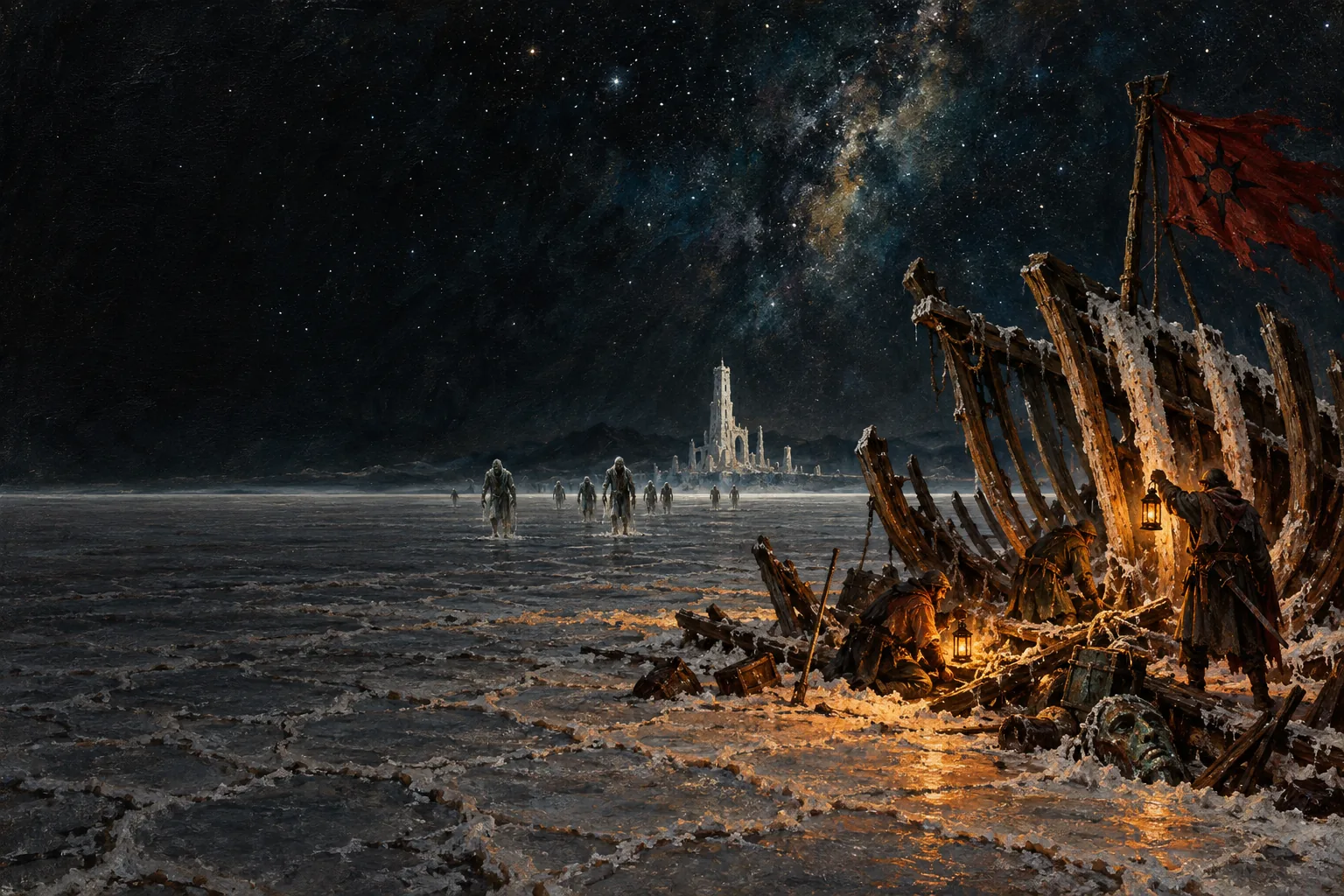
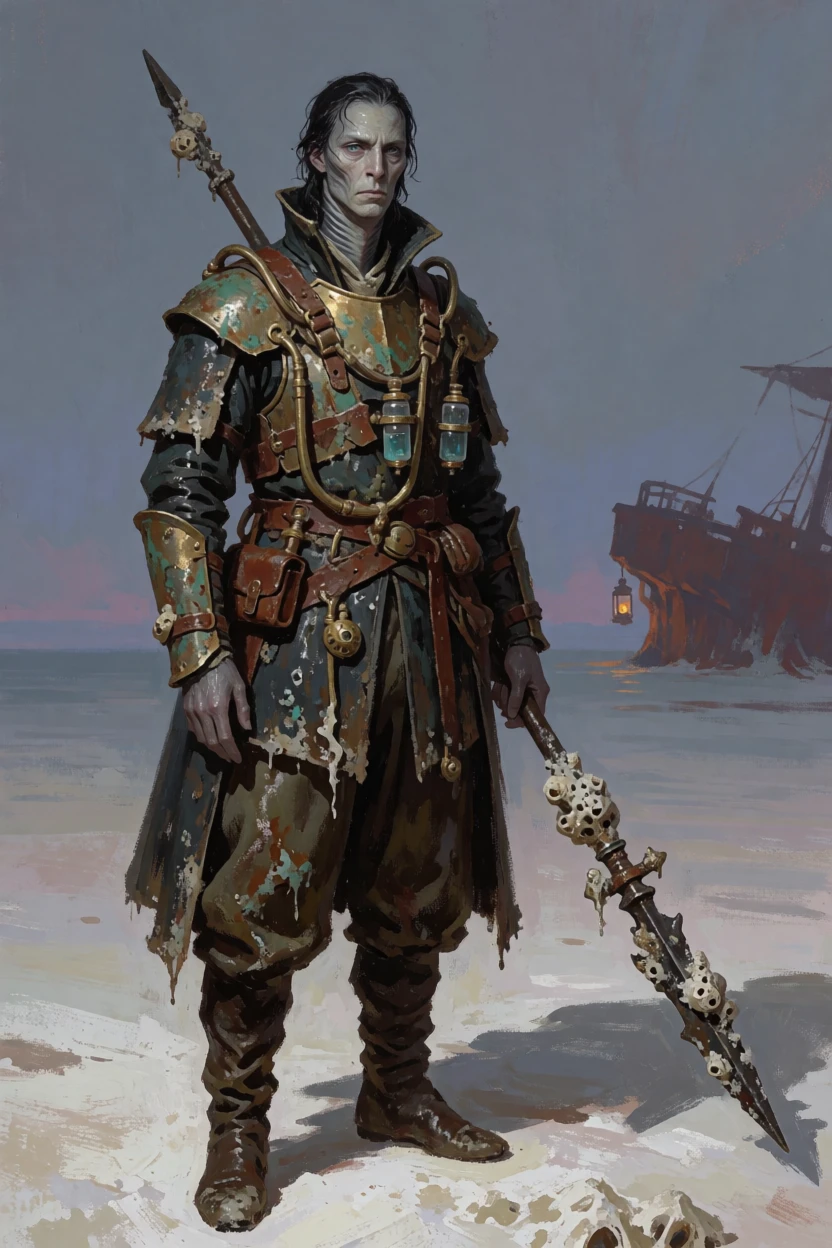
Paintings made for this page to illustrate the world. The world itself (map, peoples, cast, lore) is exactly what the Studio holds.
The cast
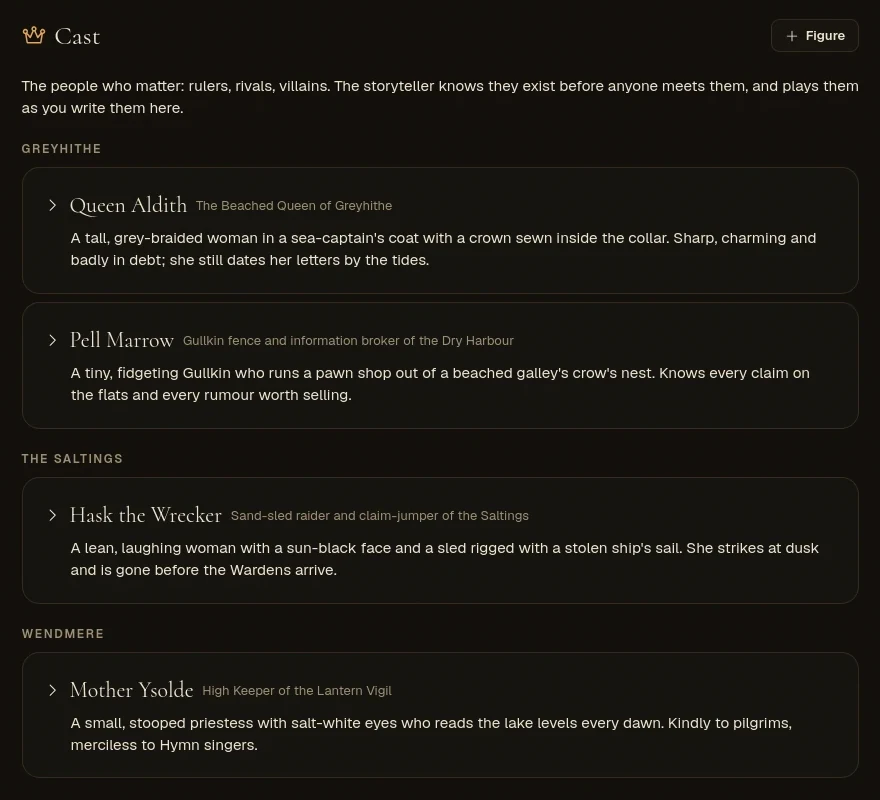
Your villain exists before anyone meets her.
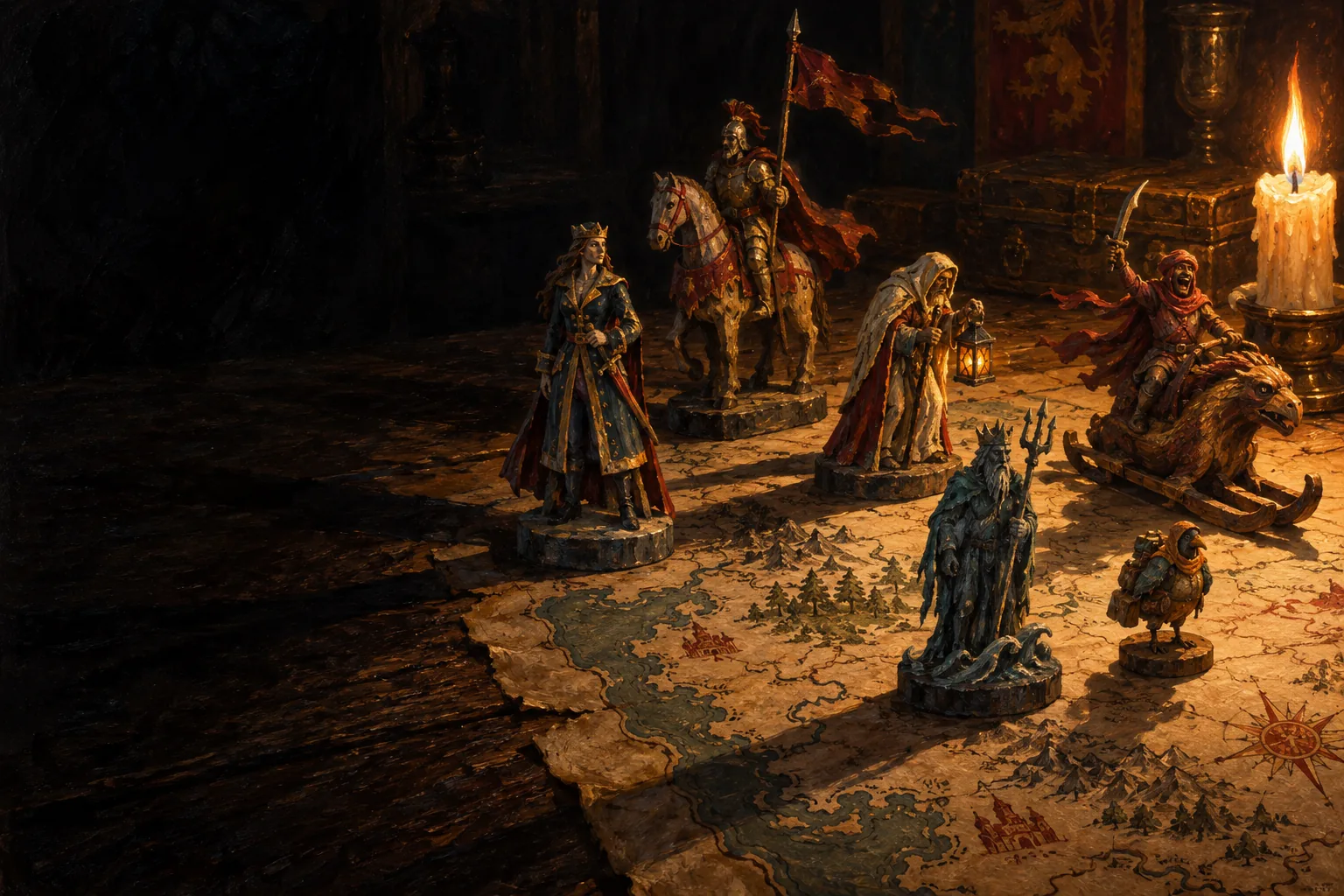
Write down the people who matter: the queen, the marshal, the raider on the salt flats. Give each a manner, a want and a secret. The storyteller is told who belongs to the region the players are in, and who is out there elsewhere, and it is told never to invent another holder of their roles.
- When the story calls for Hask the Wrecker, she is built from what you wrote: her people, her role, how dangerous she is, and the secret only the storyteller knows.
- Once met, she's a real character with memories of the players, like anyone else in the world.
- Ask about someone nobody has met yet and the storyteller knows they exist and where they belong.
Peoples and magic
Limits that hold, in words you'd use anyway.
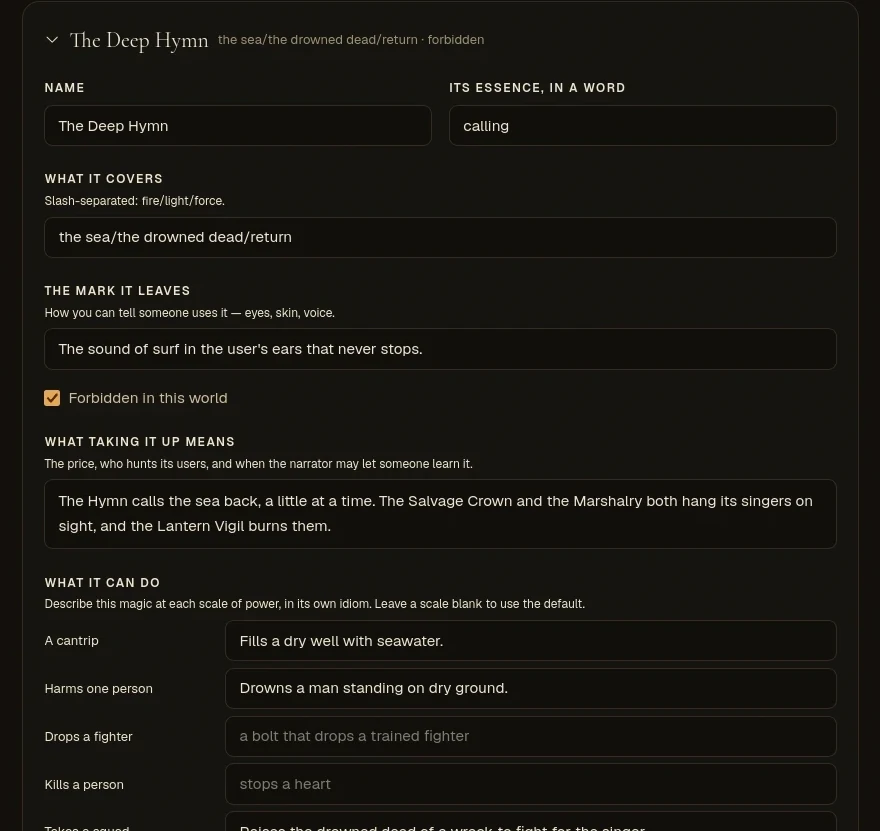
A people is a description the storyteller reads, plus limits the engine enforces. A school of magic is described at every scale of power, in its own idiom, and the engine prices the effect by scale, so a spell costs what it should wherever it comes from.
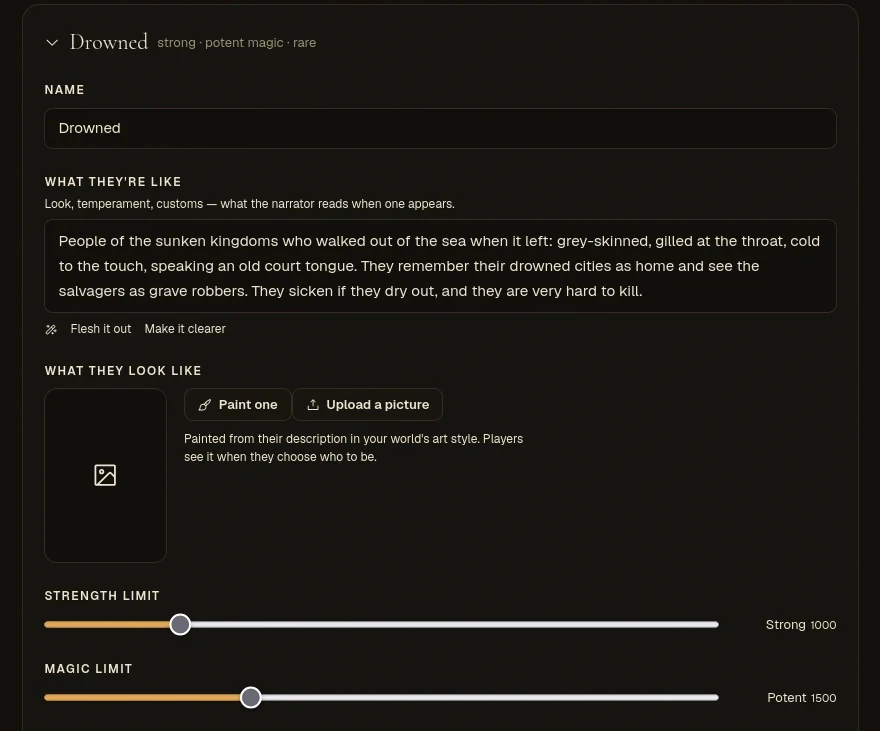
Peoples
- Strength and magic limits run from Frail to Legendary and None to Arcane-born. Heroes can't be created past them, and a people with no magic can't take up a school.
- Transformations, from a nudge to a rebirth. The count is a hard limit.
- Where they live decides who players meet in that region's towns.
- Paint a picture of them from their description, or upload your own. Players see it when choosing who to be.
Magic
- Call it schools, currents, paths, arts, or whatever your world calls it. Or switch magic off.
- Say what it does at each scale, from A cantrip through Kills a person to Breaks a fortress. The storyteller shows it that way; the engine decides what it costs.
- Mark a school forbidden and write the price. The storyteller is told who hunts its users.
Rules
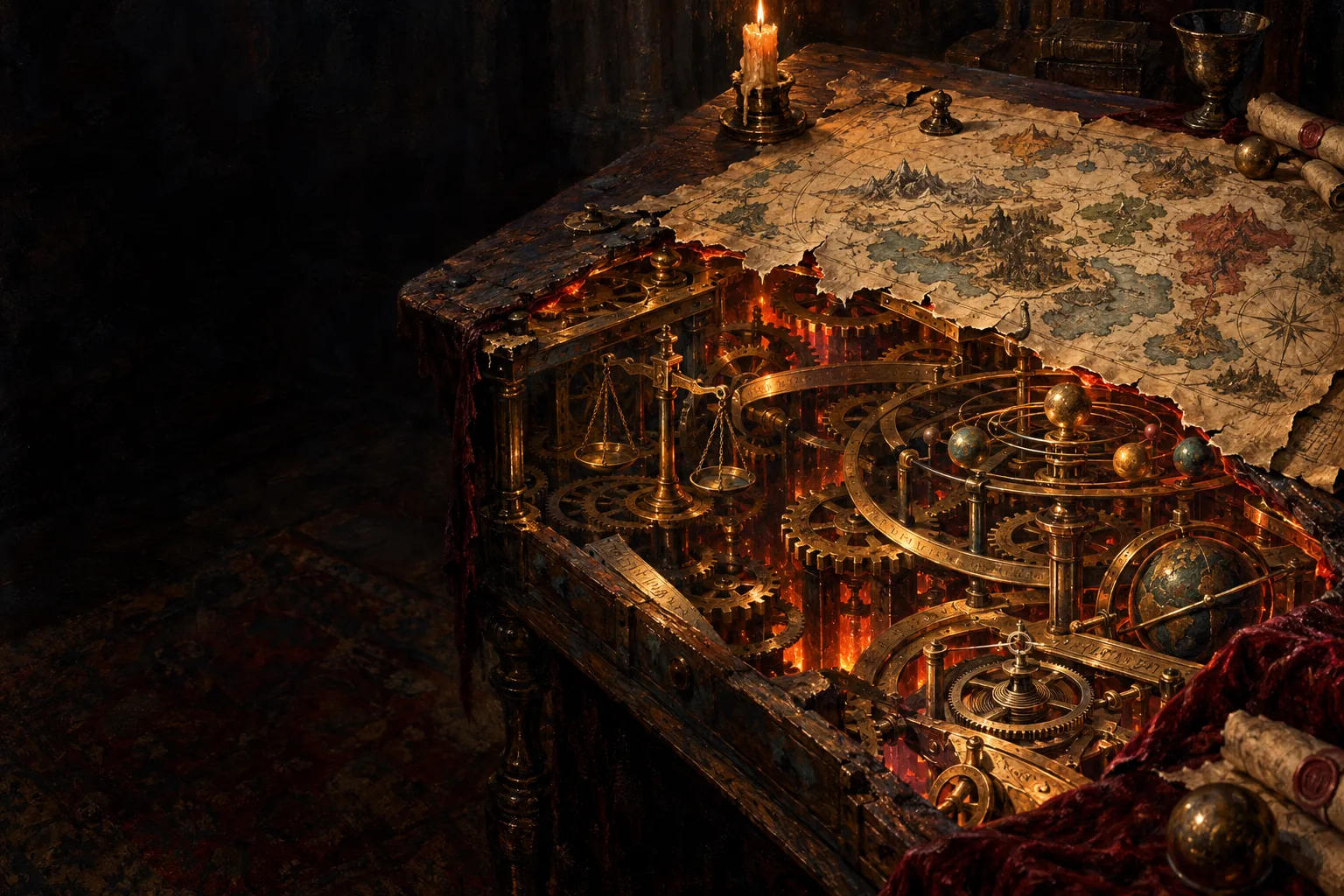
Rules the storyteller can't talk its way around.
Start from a feel (Classic, Heroic or Grim) and change only what you want different. These aren't suggestions in a prompt. Turn death off and the tool that kills a hero downs them instead. Cap companions at two and a third one won't follow, however well the story is told.
Classic
Real danger, room to grow.
Heroic
Heroes are beaten, not killed.
Grim
Death is final, purses lean.
Also yours: how sure heroes' and enemies' aim is, a new hero's purse, how fast they grow, how quickly the day passes, how fast word of a deed spreads, how often trouble finds them, the price of sea passage, whether a failed craft eats its ingredients, and which AI model tells the story.
Every rule, and what it changesWhen a hero falls
Off: the kill is refused and the hero is downed instead.
They die for goodThey're beaten, and wake laterTime to save a fallen hero
The bleed-out clock on a downed hero.
MomentsA few hoursHalf a dayA full dayDaysPlayers fighting each other
Off: robbing, harming or killing another player's hero outside a shared fight is refused.
AllowedNot allowedCompanions who can follow one hero
The next one won't follow.
NoneOneA pairA small bandA companyAny numberThe most dangerous thing the world may bring
Nothing stronger is ever created.
Trained fightersChampionsLegendsMythsWorld-endersGreat powers can scar the map
Craters, razed towns and new roads, or none.
YesNoHow much a hero can take
The hit-point formula.
FragileHardySturdyTough as oakThe biggest reward handed out at once
Larger grants are cut down to it.
ModestFairRichKinglyNo limitLong journeys rest the party
Whether travel heals.
After a day on the roadAfter a few daysAfter a weekNever
Ask your world
Find the holes before your players do.
Ask the storyteller anything (“Who really controls the water trade?”) before a single player has walked in. It answers from your canon, and tells you how much of the answer your canon actually settles.
Settled by your canon
The answer comes straight from what you wrote, with the sources.
Partly the storyteller's reading
Your canon points that way; the rest is inference.
Your canon is silent: this is invented
Here's what it would make up. Add it to your lore as a start, or write your own.
Check the whole world reads everything you've written and reports what contradicts itself, what's missing, and the loose ends.
Lore the storyteller looks up
History, legends, customs, creatures, anything you like, as entries with a title and the facts a narrator must keep straight. When a scene touches one, the storyteller looks it up rather than guessing. Add the other names players might use and those find it too.
creatures
The Drowned Dead
They lie quiet under the salt by day. After sunset they walk to where they died, and anything in the way is pulled down with them.
customs
Water Law
Fouling a still is a hanging offence, and any crew must give water to anyone who asks for it once.
legends
The New Shore
Whoever finds where the sea went will own a harbour the world has never seen. No expedition has come back.
Three of The Long Ebb's ten lore entries.
Inside the buildings
In testingStep inside, and the room is really there.
Walk into a tavern and it has a floor plan: a common room, a kitchen, a cellar, and people standing somewhere in particular. The storyteller moves them by naming spots (“the bar”, “stairs up”, “near you”), never coordinates. The engine walks them there through the doors, one beat at a time.
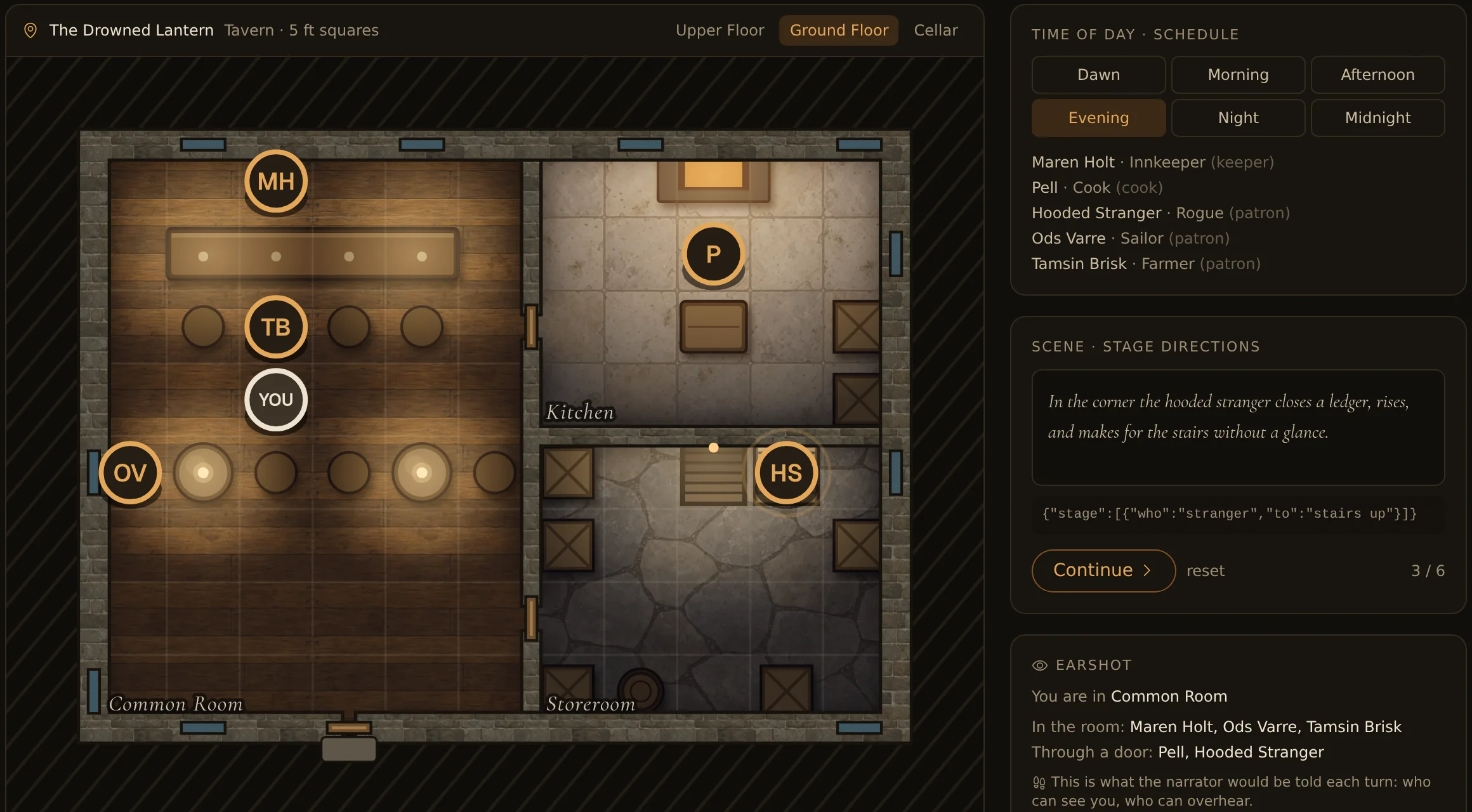
{"who":"stranger","to":"stairs up"}) on the right; who can see and overhear you below it.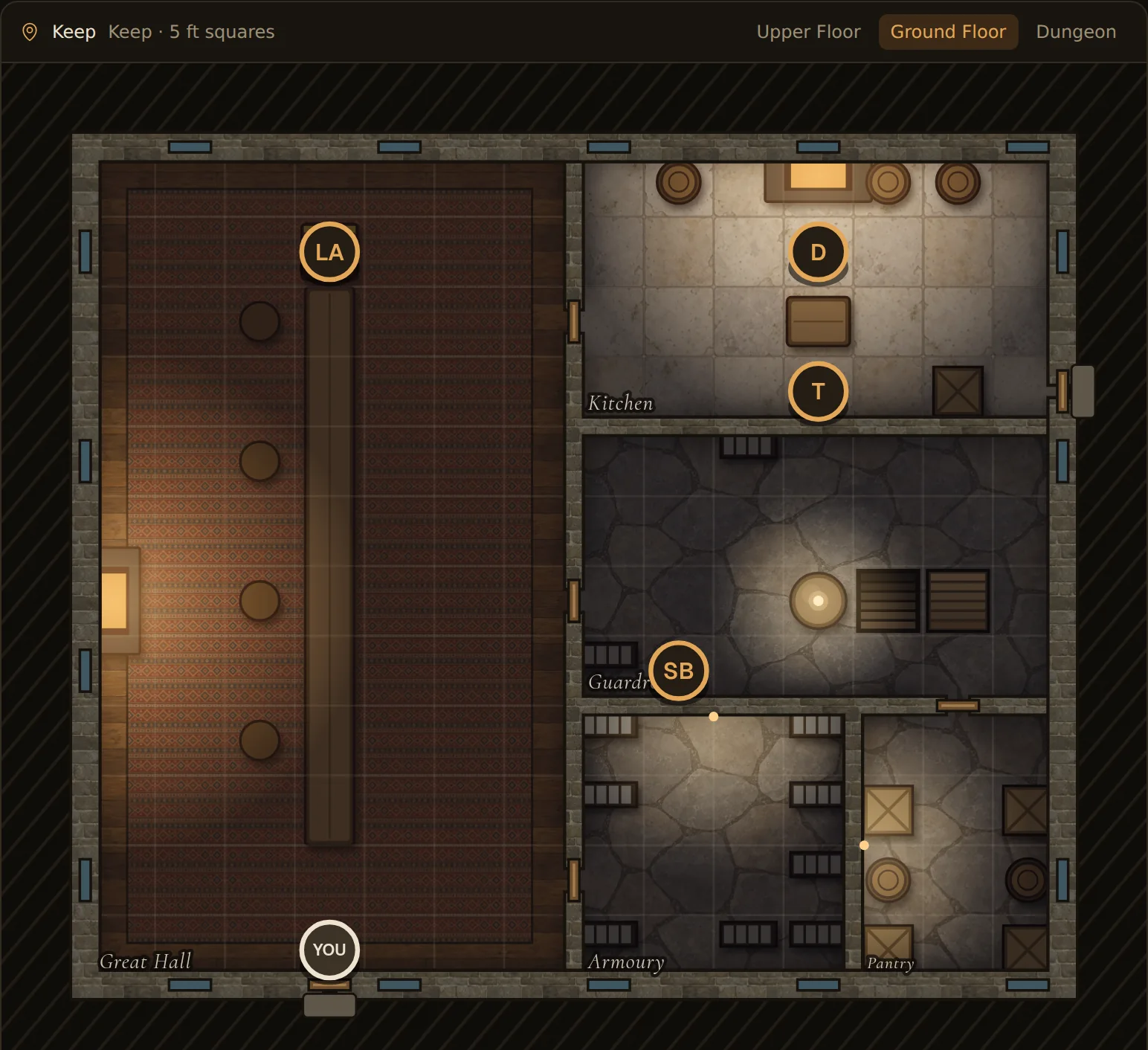
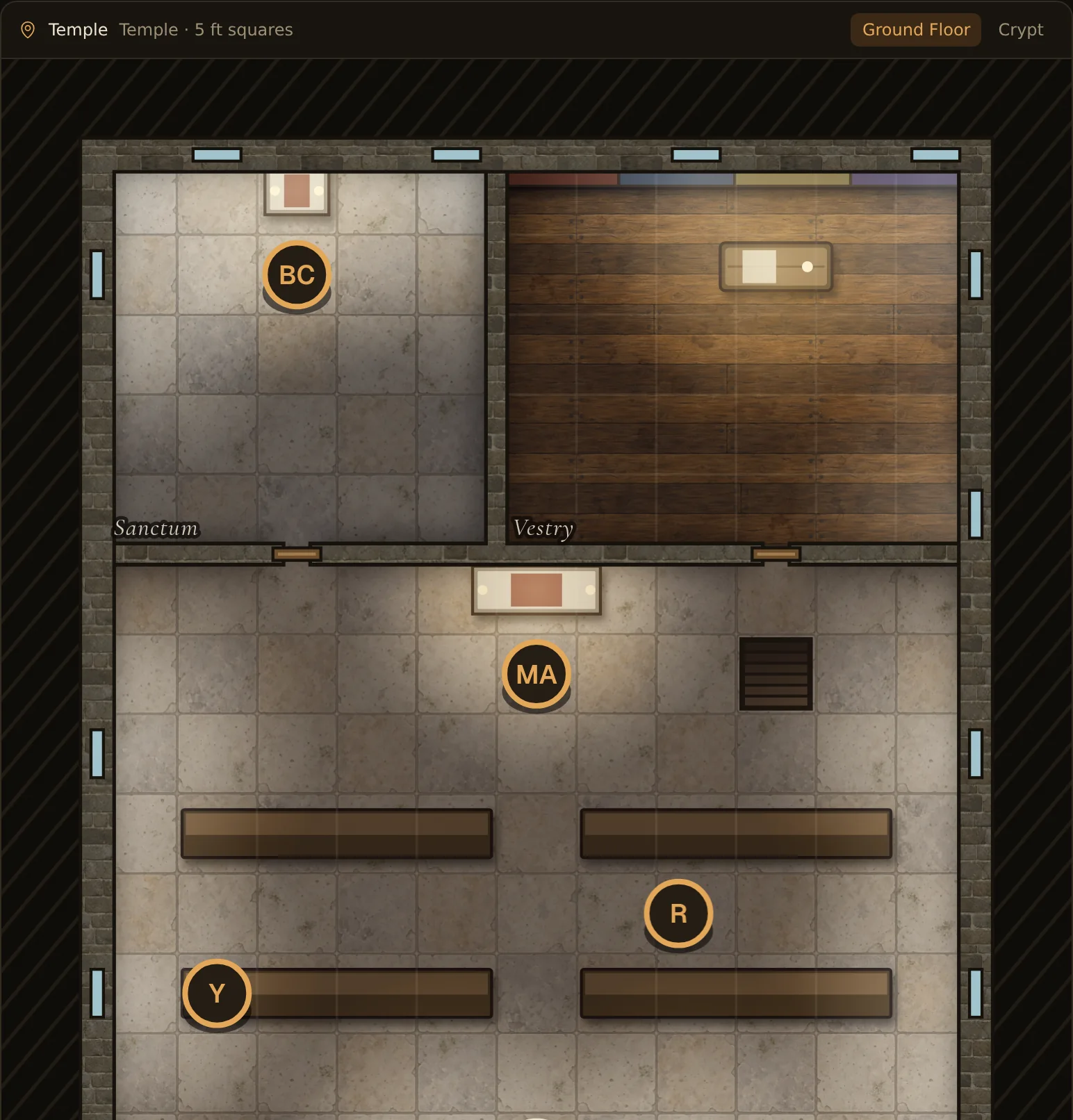
Floor plans for real places
Taverns, temples, keeps and gatehouses get rooms, doors, stairs and cellars, drawn from what the place is and lit by the hour.
People keep hours
The keeper holds the bar, the cook the kitchen; patrons drift between seats. At night the rooms empty and the light changes.
Who can hear you
Same room: they're present. Through a door: they might overhear. The storyteller is told which, every turn.
Fights
When it comes to blows, everyone has somewhere to stand.
A solo fight in your world plays out on a battle map: the building's own plan when it starts indoors, or a forest, an alley, a bridge or a cave outside. Enemies announce their blows, so stepping out of one works. A shove breaks the furniture it lands in, and fire leaves the ground burning.
The engine works out where everyone ends up and what every blow did, before the storyteller writes a word. It narrates the result. It doesn't get to change it.
The game's own battle map, playing a scripted turn in your browser.
Money
Every world names its own coin.
Gold and silver, crowns and shillings, beads, shells, whatever your world trades in. Say what the smallest coin buys and the rest follows: prices in scenes, rewards, a new hero's purse and the price of passage all come out in your coins.
Add a price guide and a line on how trade works, and the storyteller quotes from it instead of making numbers up.
- crownOne crown is worth 20 shillings
- shillingOne shilling is worth 12 salts
- saltOne salt buys about half a loaf
“The Salvage Crown stamps the crowns and shillings, but out on the seabed everyone pays in salts. Water is traded by the skin and often counts for more than coin.”
Your table, your key
Invite who you like. Pay only for what they play.
A world is private to the people you let in. Send an invite link, or publish a public page where anyone can read about the world and ask to join, and you decide who gets in. Characters are separate per world, so your players start fresh in yours.
Invite links
One link per group; revoke any of them. A Worldtable account and your link is all a player needs.
A public page
Your map, peoples, regions and magic on a page of its own, with a way to ask to join. No rules or spoilers.
Your own AI key
Your first $1 of AI is on Worldtable. After that your world runs on your own key, from OpenRouter or any OpenAI-compatible provider, stored encrypted, and only for your world.
Safekeeping
Build boldly. Nothing is lost.
Every save is undoable
The Studio saves as you type and keeps your last twenty versions. Restore any of them.
Playtest a draft
Walk into your own draft with a throwaway hero. Then start over: play records wiped, your world untouched.
Publishing fixes the land
Once people live there, the coastlines stop moving. Names can still change.
It's one file
Your whole world, map included, exports and imports as a single document.
Straight answers
What builders ask first.
- Will the AI actually respect what I wrote?
- The parts that matter most aren't left to it. The map, the peoples' limits, the rules and the money are held by the engine, and the storyteller has to work within them. Your prose (tone, histories, taboos, the truths of your world) is handed to the storyteller every scene. It's good at following it, and when it drifts, the Ask tab is where you find out and tighten your canon.
- What does it cost?
- Worldtable doesn't charge you to build, and your first $1 of AI is on us: enough to draft a world and play it for a while. After that your world's AI (the storyteller, portraits, scene paintings) runs on your own key, so you pay your provider directly for what your players use, and you can choose the model. That's an OpenRouter key, or one from any OpenAI-compatible provider (portraits and scene paintings need OpenRouter).
- Do my players need to pay or sign up for anything?
- They need a Worldtable account to sign in. An invite to your world is all the access they need, and turns in your world run on your credit or your key, never theirs.
- Can I use a world I've already written?
- Yes. Paste it in section by section. The helpers will tidy or flesh out what you paste, and Ask your world will show you where it contradicts itself. The whole world also imports and exports as one file.
- Who can build right now?
- Anyone with an account. Sign in, open your Worlds page and name a world; one account can own up to five. Your first $1 of AI is on Worldtable; add your own AI key when it runs out.
Your world is waiting to be drawn
Write the first sentence.
Then go and live in it.
Name a world and you're in the Studio. Draft it with Worldtable or build it by hand, walk into it yourself, and send the invite when it's ready.