Battle maps for fights no map could hold
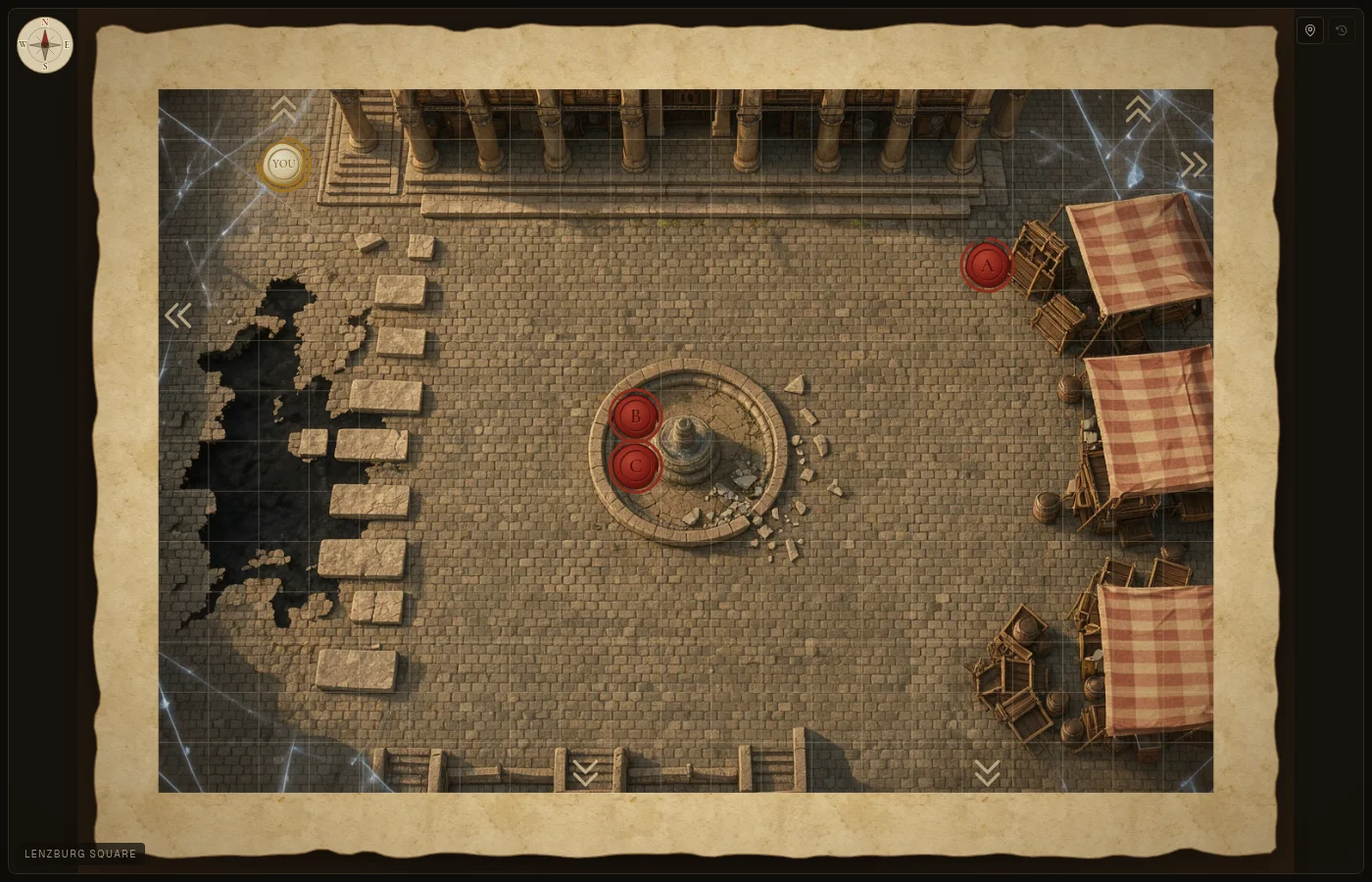
When a fight happens somewhere no map could hold (a sandworm's back, a square torn into floating slabs), the world paints the map, and the fight is played on what's in the picture.
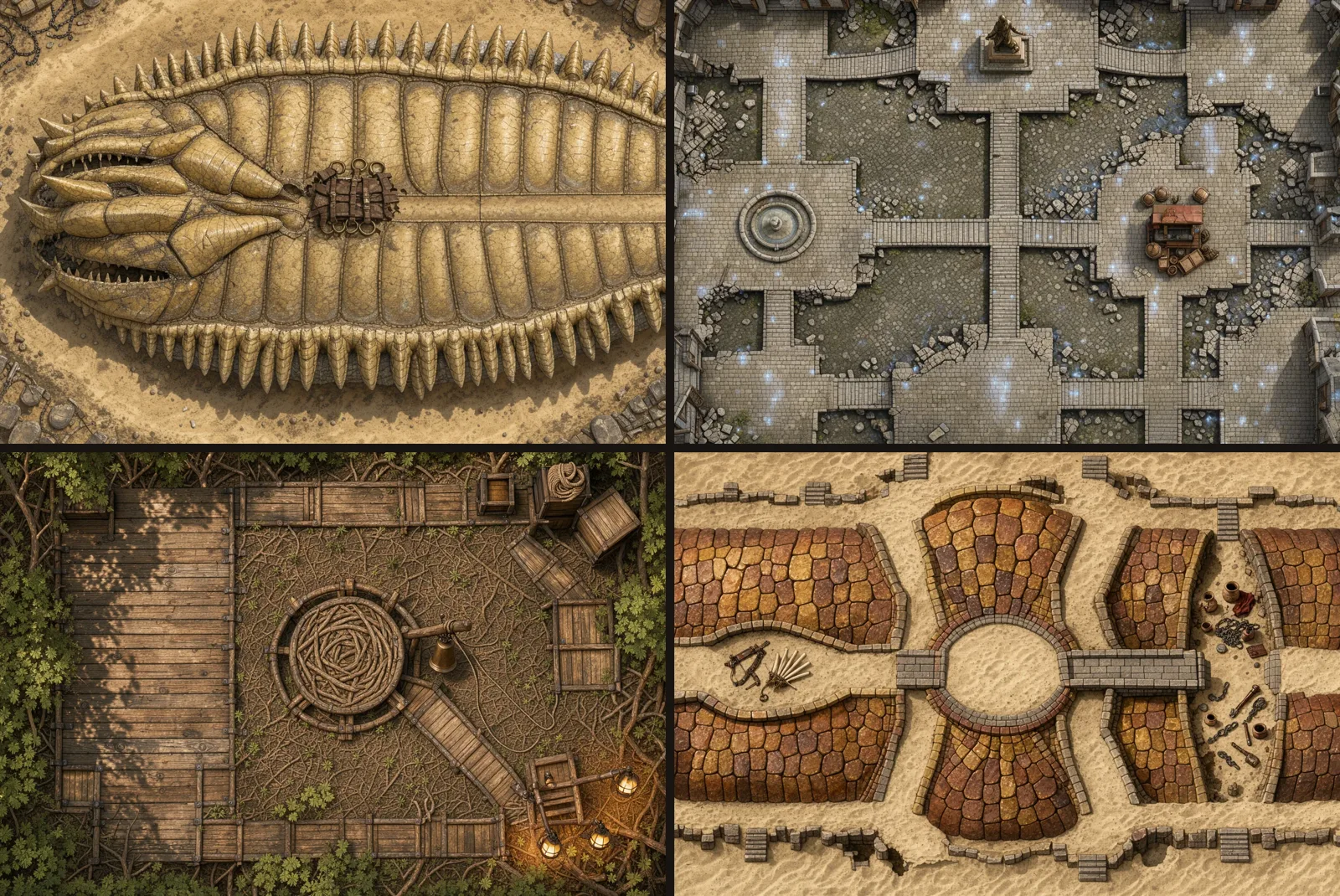
Some fights don't happen anywhere a map-maker would think to draw. You're fighting on the back of a sandworm while it's still moving. A square has been torn apart, and its cobbles float in the air. A raid lands on a platform high in the forest canopy.
Until now, fights like these got the nearest ordinary map, like a desert or a town square, and the story had to pretend. Now the world paints the map for that fight, and the fight is played on what's in the picture.
The map follows what's happening
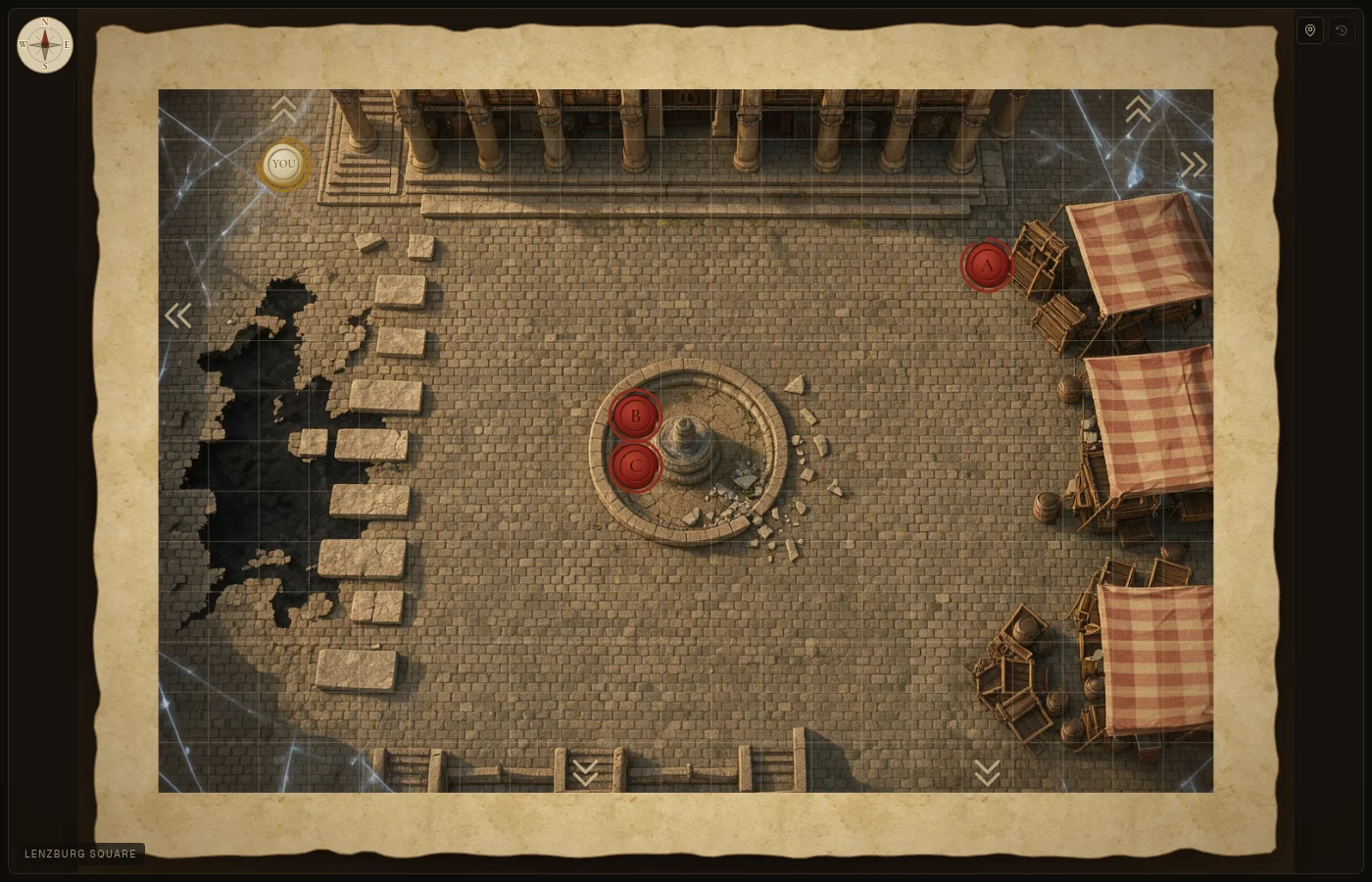
Every fight now picks its map from what's actually going on: the scene so far, what you just did, and how the fight began. It doesn't go by the place's name alone. If a brawl on the docks ends up down in the flooded sewer underneath, you fight in the sewer.
Most fights still use Worldtable's hand-built maps: forests, roads, docks, crypts, squares and the rest. They're fast and they play well. In our tests, 52 of 53 ordinary fights kept one. A map is painted only when none of them could hold the fight.
How a painted map becomes a real one
A picture alone isn't something you can fight on, so each painting is turned into a map the game can use:
- A brief from the world. The world's storyteller writes what goes where, using the place, the moment and the world's own truths. A square in a world in drought gets a dry fountain, not a full one. The brief also names the map's areas and features, like the Segment Trough or the Crown of Chitin.
- The painting. The map is painted straight from above, like the maps people buy for online tabletops.
- A look check. A painting that's tilted, shows people, or has a horizon is thrown away and painted again.
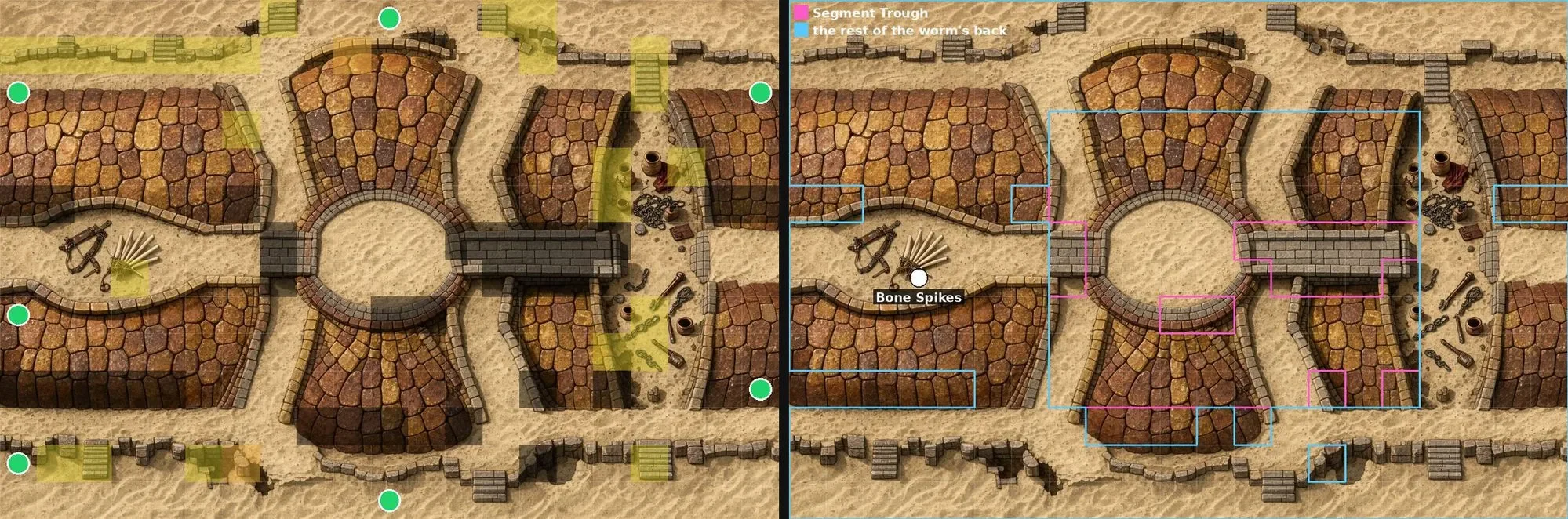
- Every square read. Each 5-foot square is read one by one: open floor, wall, cover you can hide behind, rough ground, water you can wade, water you can't, a drop, lava, ice. Thin walkways and gangplanks are found too, so you can cross them.
- Named features found. The areas from the brief are found in the picture, and the storyteller uses them to place people: "she ducks behind the spine ridges".
- Can you fight on it? The map must have one big area you can cross. If it doesn't, the world paints again. After three tries, or if anything goes wrong, the fight goes on a hand-built map as before.
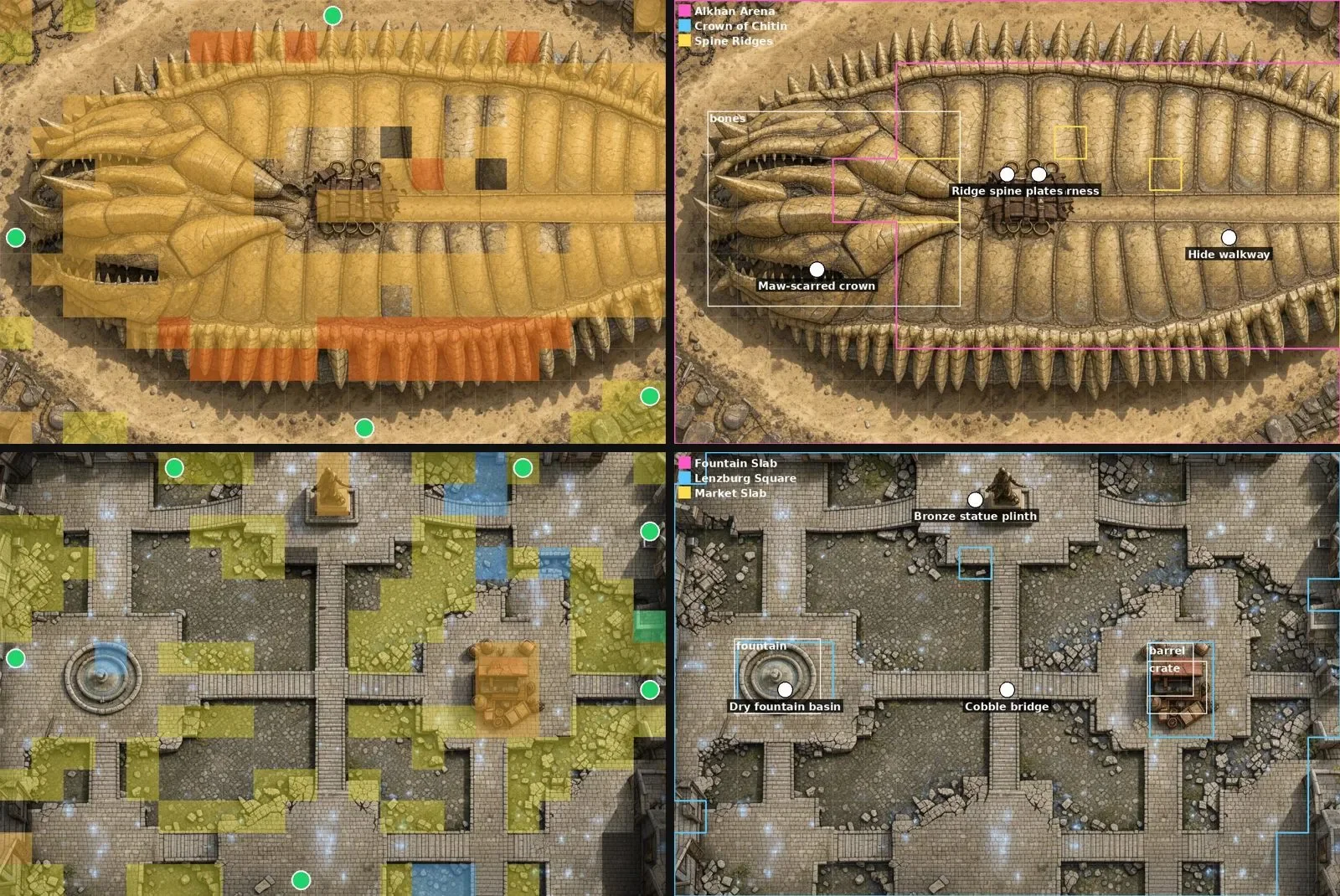
From then on it's an ordinary battle map. Movement, cover, line of sight and reach all work on it. Lava burns whoever ends a turn in it, ice can freeze you in place for a turn, and a drop is a drop.
Kept, or made for one fight
When a fight happens at a place as it always is, the painted map becomes that place's own. The next fight there is played on the same ground. When the fight is somewhere the story took it (on a creature, aboard a ship, under the streets, or on ground the fight itself tore up), the map is made for that fight only, and the place keeps its usual one.
What it opens up
Any fight you can describe can have a map now. In testing it painted a sky-ship moored at a cliff, with the gangplank to cross. It also painted a frozen waterfall with a hole in the ice, a causeway over lava, a dead dragon's ribcage and a mushroom wood. Each became a map you could move, hide and fall on. You don't need to set anything up: play the scene, and when the fight starts somewhere strange, the map is there.
What to expect
- It takes a moment. A painted map takes about ten to twenty-five seconds the first time. A place's kept map loads at once after that.
- It can misread. A busy ship's deck sometimes reads as all cover. A pit can read as sunken ground you can stand in. A canopy can lose its platforms among the leaves.
If a painted map doesn't match the picture (a wall you walk through, or a floor you can't stand on), tell us in Discord. A screenshot of the map helps.