Same storyteller, any century
Worlds set in the present day or the far future, with seven new official worlds: cars and fares, phones, the Feed, guns and cover, planets, and a Studio that builds any era.
Until today, every Worldtable world had swords, inns and a horse. Now a world can be set in the present day or in the far future, and it isn't fantasy wearing a different coat of paint. The engine changes with the setting: what's on the map, what you pay with, how you get across town, who you can text, how a gunfight plays, and what lies under the city.
Seven new official worlds are open today to show it off, from a neon crime city to a freighter captain's corner of the galaxy. Every one of them is free to join with one click from the Worlds page.
Seven new worlds
Coral Harbor
Sunshine, neon and money nobody can explain. The boss just went to prison. Get a car. Get a job. Get a name.
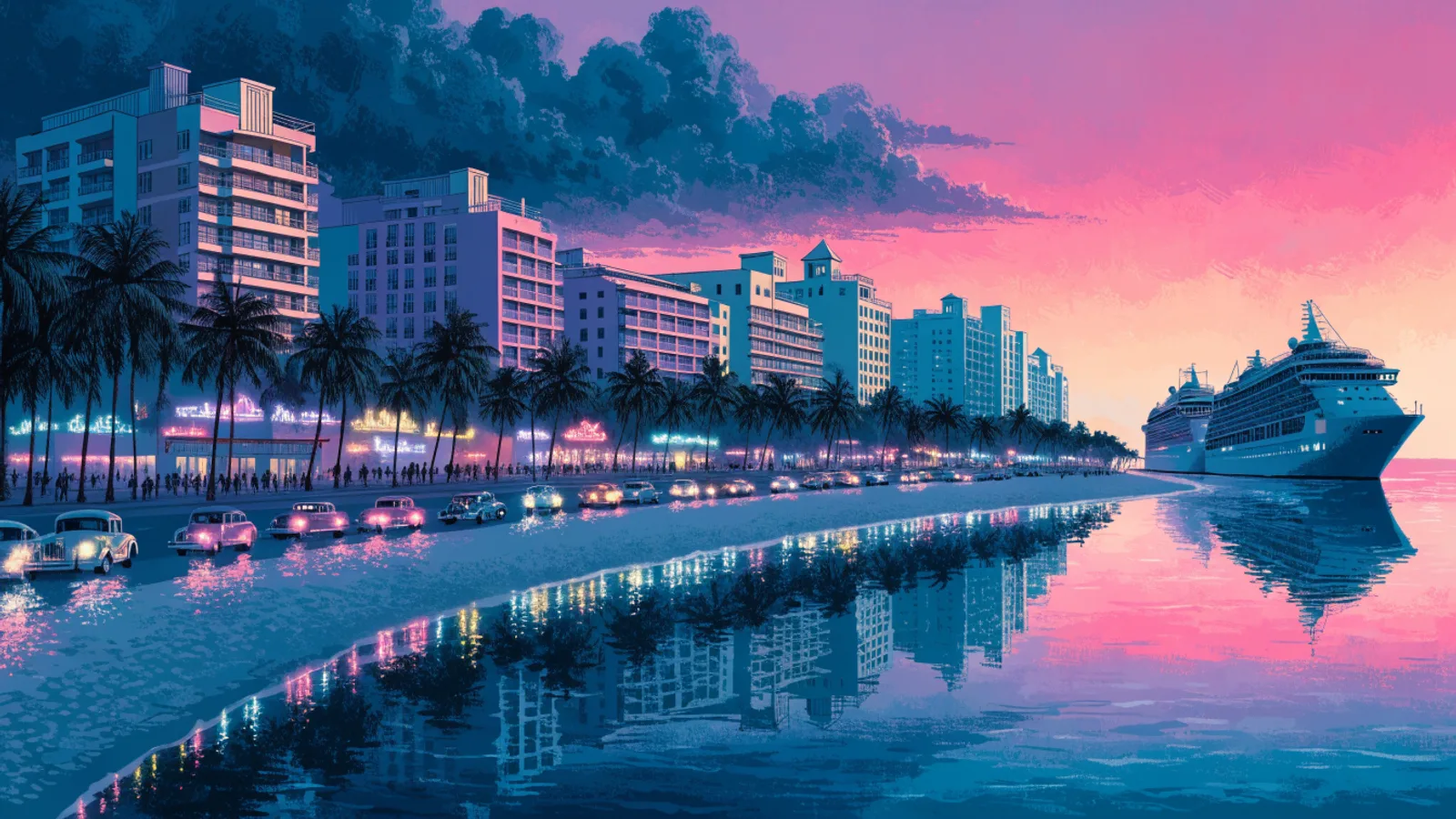
You start as a small-time hustler with no crew, no car and no name, a month after the city's biggest boss was arrested and every deal in town blew open.
- Wanted stars. Crimes earn stars, and every star brings a harder response. Shake them by lying low, getting out of town, changing plates, using a burner phone or hiring the right lawyer, each paid for in days and dollars.
- The bosses' job board. Getaways, collections, smuggling runs, heists, cars to order and street races, posted by bosses who are real people in the city.
- A garage of your own. Steal a car, buy one or win one in a race, and it's yours. A stolen car has hot plates until you swap them.
- Businesses. Buy a club, a car lot, a boatyard or a cab company, and it pays into its safe every day.
- Favours. The city runs on them, and they go in a ledger. The people you owe don't wait forever.
- A hurricane on the way. A countdown to landfall, and the city boards up around you as it gets closer.
Cottonwood Bluffs
Nine weeks after the dead got up. The bitten turn the first time they sleep. Find food, find people, find a door that locks.
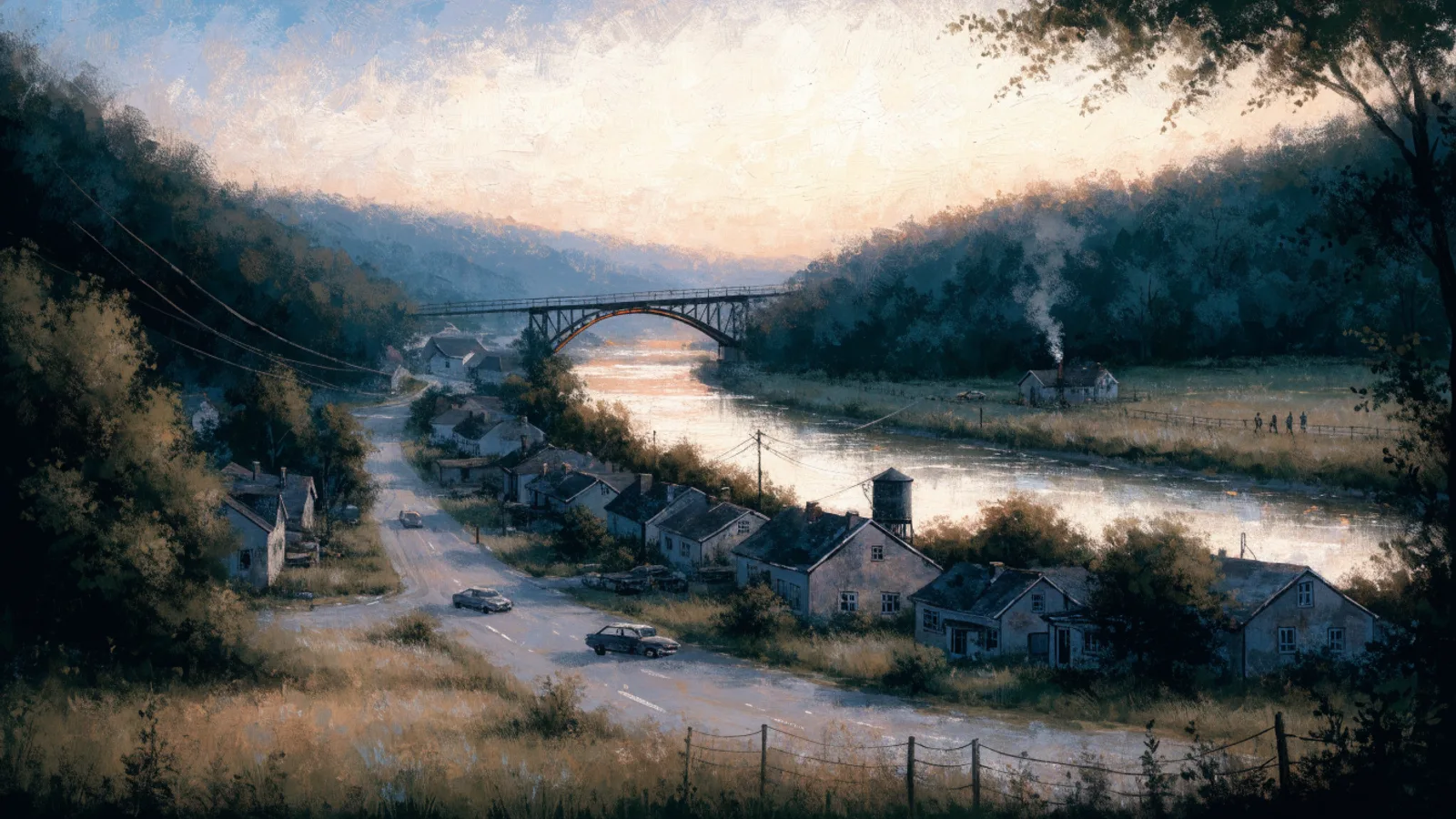
- Stores and a base. Food, medicine, fuel and parts are counted, and every mouth eats a day of food every day. Claim a base, build it up and take survivors in. If the food runs out, your people stop trusting you.
- Noise. Breaking glass, gunshots and alarms raise your noise, and the dead come to it.
- The bite. The bitten turn the first time they sleep, so someone in your group getting bitten is a decision.
- The valley's groups. The Mall, the firehouse, the truck stop and more, each with a place, what it wants and an opinion of you that your choices move.
Vickston City
One person in a hundred has a power. The city licenses them, ranks them and sells them. Put on a mask, or don't.
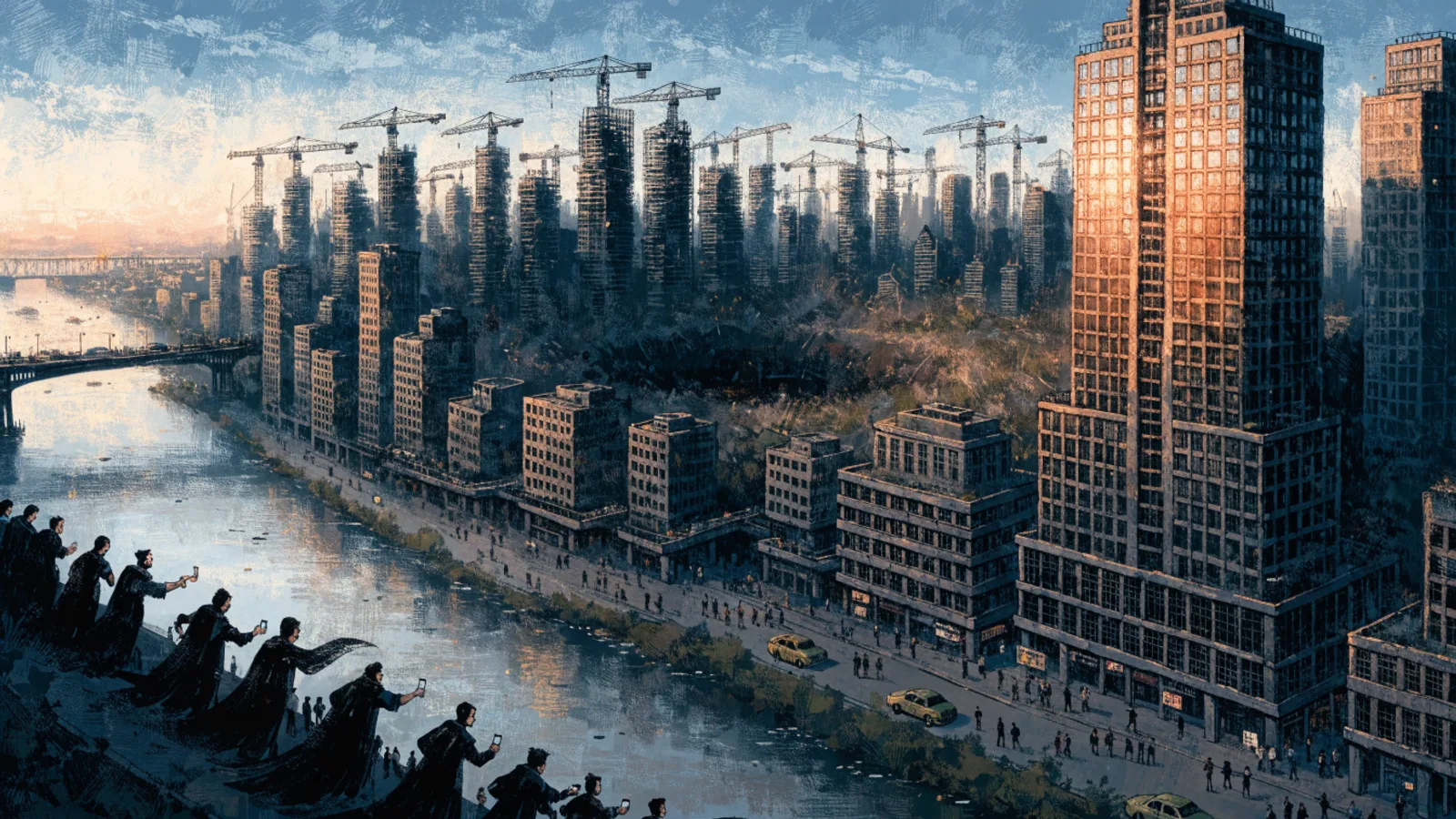
You start as a newly licensed D-rank Gifted at the bottom of an agency roster.
- Your power, from your own words. Describe it in your backstory, and the game reads its shape (strength, speed, blasts, the mind, change and more) and gives you its first powers.
- Seven ways to live. Licensed hero, vigilante, villain, agency fixer, costume tailor, doctor for the powered or reporter, each with its own board of the day's work.
- Fame and standings. The city publishes its hero rankings and its most-wanted list, and you can climb either one.
- Sponsors. Fame is for sale. A pizza place backs a rookie, a car maker a rising star, and every deal comes with demands.
- Collateral damage. Break the city and the city bills you for it.
Ismada
A ring at every star, six peoples and a truce. Fuel up. Pick a job. The gates go everywhere. So can you.
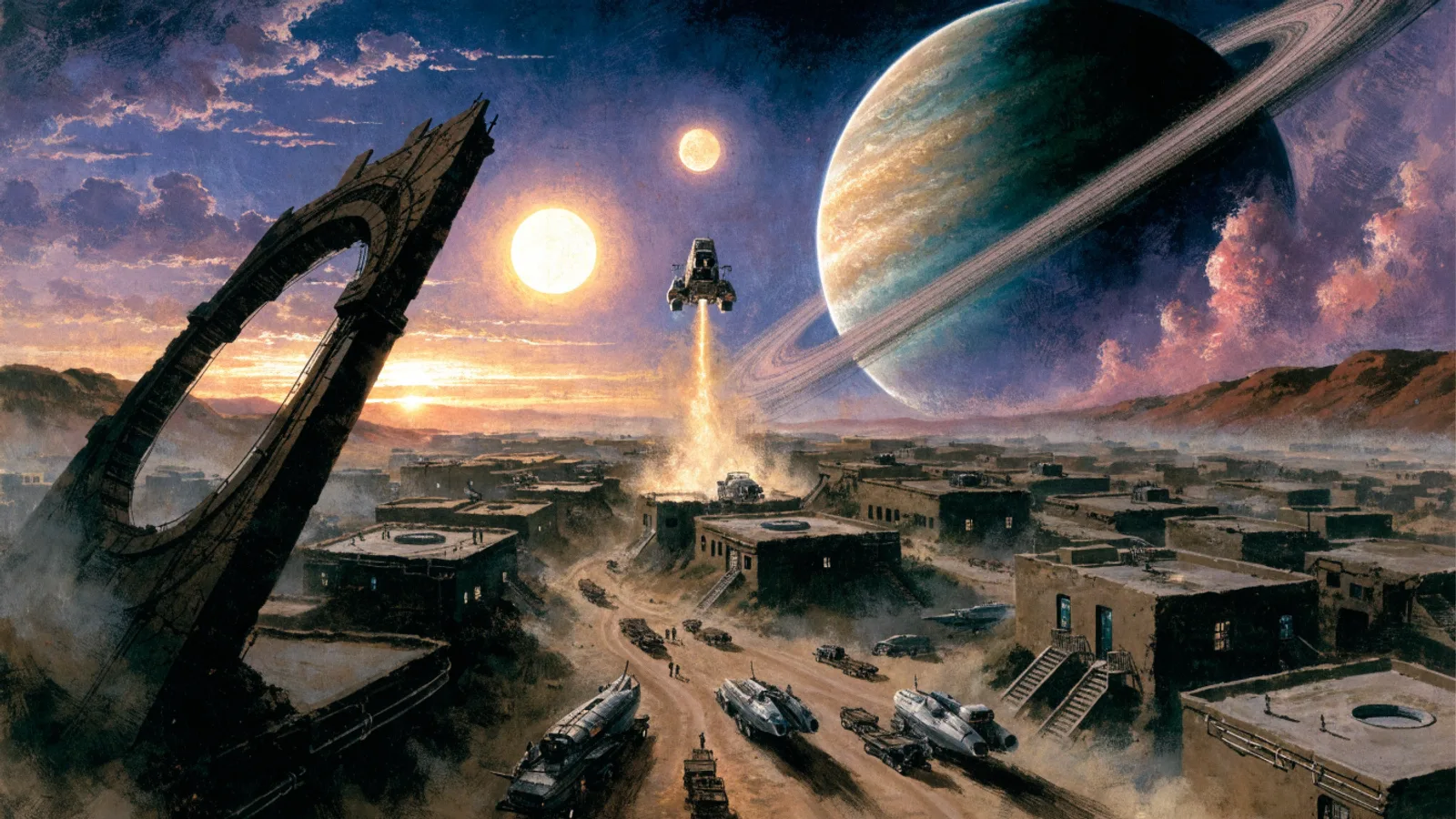
You start as a new captain with a patched-up freighter at Miraq port, picking your first job off the board.
- A ship of your own. It has a hull, a fuel tank and a loan. Jumps burn fuel, and the lanes charge tolls.
- Bounties and jobs. Bring someone in alive for the full price, or haul sealed freight against a countdown.
- Trouble after the jump. A pirate or a patrol may follow you out of the ring. Fight, run or talk your way past.
- A price on your head. Cross the wrong company and the warrant follows you from system to system.
- Five other worlds to fly to, each with its own sky, gravity, air and hazards.
Cythos
Twelve million people under a roof of ad screens. Born owing, chromed on credit. Get chrome. Get paid. Get out.
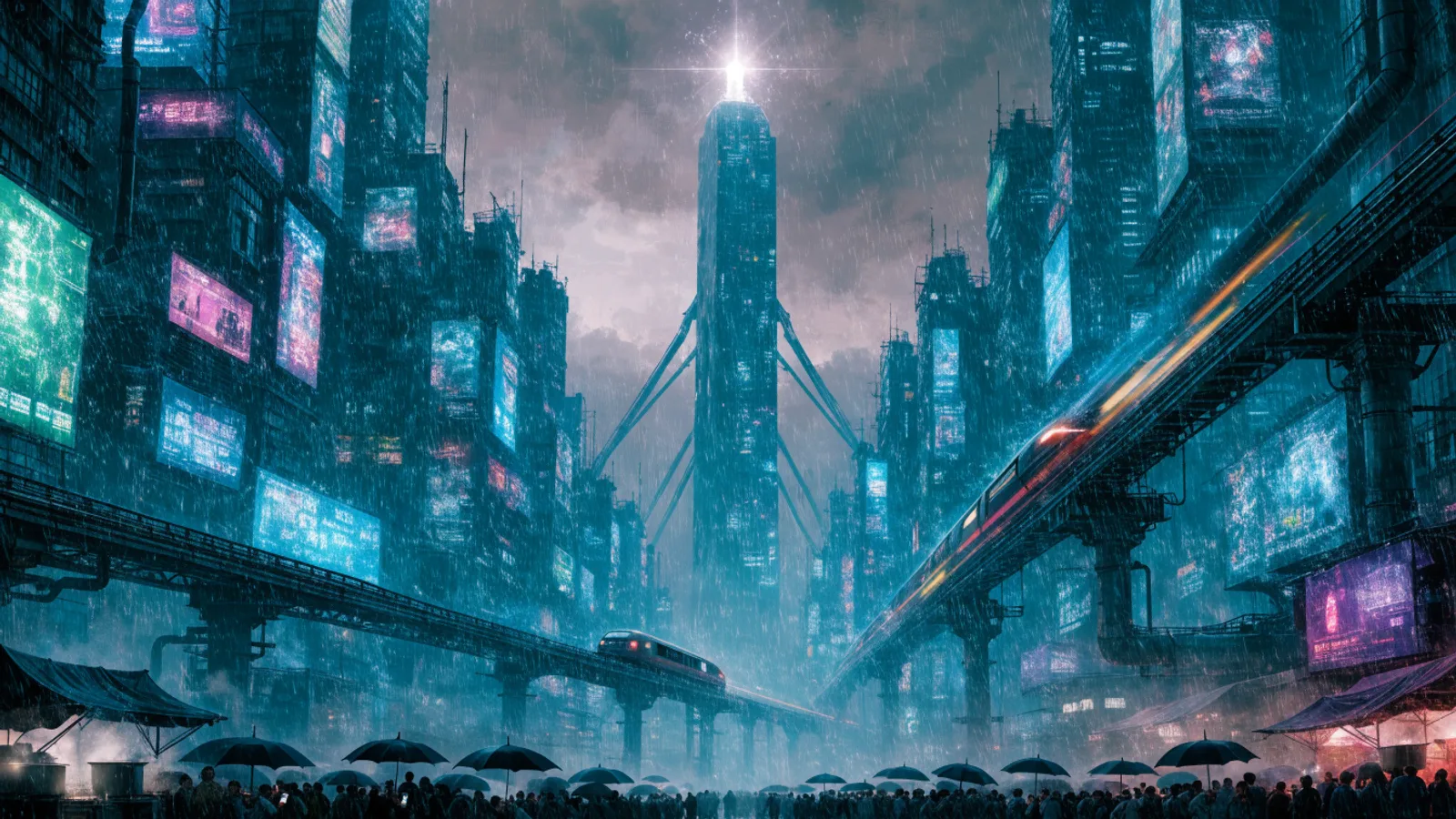
You start as a runner born owing on the Ledger, taking gigs to pay down your chrome before the repo crew comes for it.
- Chrome on credit. Every implant is a real ability on your sheet, and every one costs you some of your Humanity. Get fitted at a clinic on finance, or buy used in a back room, where it might glitch.
- The Ledger. Your debt is counted, and when you fall behind the repo crew comes looking.
- Fixers' gigs. A board of work that opens up as your Street Cred grows.
- Jacking in. With a jack or a deck, break into the doors, cameras, records and accounts around you, one roll at a time. A miss leaves a trace.
The Long After
The war lasted one afternoon, eighty years ago. Water is money, the ruins go deep, and the tax robots still come every month.
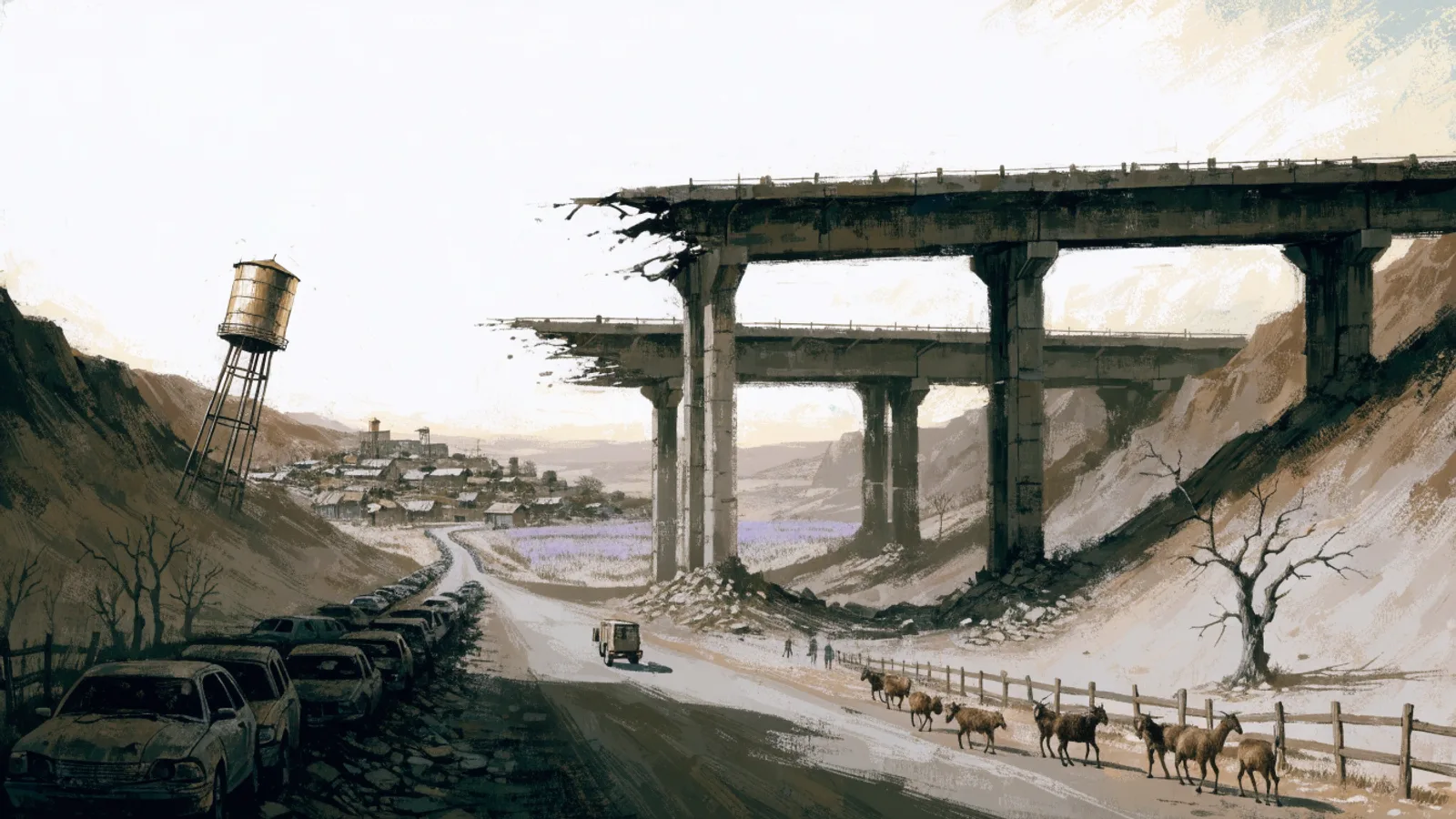
You start as a scavenger new to Bear Flats.
- Water is money, and you'll trade it for everything, bullets included.
- Radiation. Hot ground and deep ruins raise your Rads, and so does what you eat and drink.
- Real salvage. What you dig up is crafting material: scrap, wiring, gun parts, odd tech. The deeper you go, the better it gets.
- A homestead. Stake a claim, raise a wall, and people come to live behind it.
- The Bureau. The government's robots never heard the war ended. Every month an Assessor arrives to tax your household.
Hamyeol
Gates open in the streets every week. Hunters are ranked once for life. You hear the System, and it lets you level past your rank.
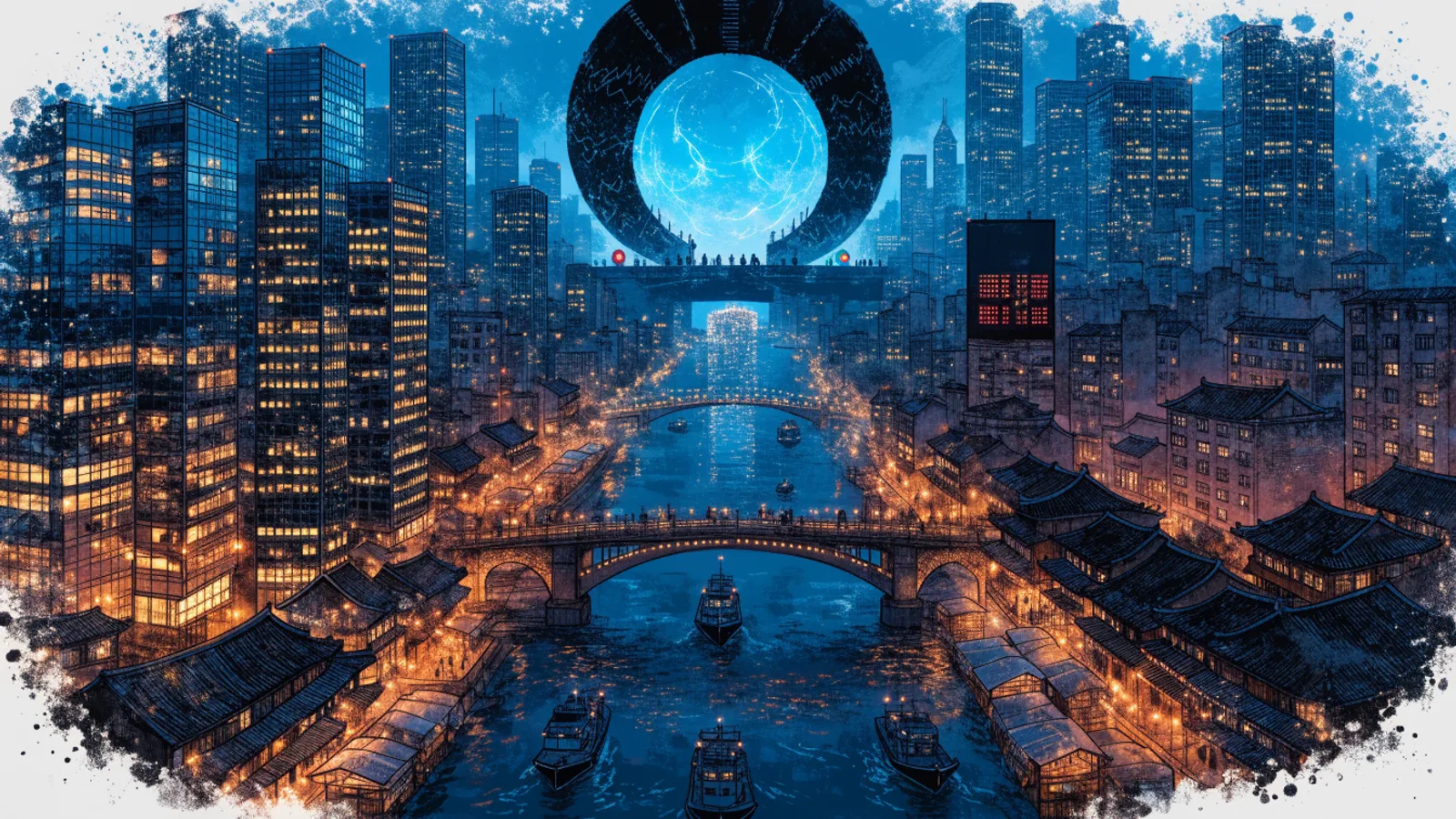
You start as an E-rank hunter who hears a voice nobody else can.
- The System. A status window only you have, with your real level next to the rank the Association gave you. It sets a Daily Quest every day, and skipping it lands you in the Penalty Zone.
- Gates. They open across the city, ranked D to S, each with a countdown to a break. Take the Association's permit and the bounty, or leave it to someone else.
- Firsts. The first player in the city to beat a named boss or clear a gate earns a title nobody can ever earn the same way, and the whole Feed hears about it.
- Cores. Sell what you bring out at the Core Exchange, or for cash off the books.
What changes when a world isn't fantasy
All seven worlds run on the same engine, and any world built in the Studio gets the same features. Here's what the setting changes.
The map
A present-day world is drawn as a road atlas, with motorways, railways and airports. A science-fiction world is drawn as a sector display, with contours, a grid and transit lines. It's the same map underneath: the builder picks how it's drawn.
Towns change too. A present-day town has bars, diners, police precincts, hospitals, malls and train stations. A sci-fi town has cantinas, market decks, med-bays, docking bays and hab blocks. Every one is a real building you can walk into, room by room.
Money
A present-day world counts dollars and a science-fiction world counts credits, unless the builder names a currency of their own.
Cars, trains, planes and jump ships
Journeys are counted in hours, not days, and the engine charges the fare before the scene is written. A 200 km drive is an afternoon, not a week of camping. A taxi across town costs what a taxi costs, every time.
- Car: 80 km/h, on roads. Bus: 50 km/h, on roads.
- Train: 120 km/h, between towns with a station.
- Plane: 750 km/h, between capitals with an airport.
- In sci-fi: a ground car at 140 km/h, a maglev at 450 km/h between stations, a shuttle at 1,500 km/h up to orbit and between spaceports, and a jump ship between worlds at 8 hours a jump.
Pick a town on the map and "How to go" lists every way there, with its time and fare. Or just say it in the story: "I take the train to the coast." A train won't take you to a town without a station, and if you can't pay the fare you go the fastest free way instead. In a party, everyone rides along with the leader.
A world can also be one city, a country or a continent. In a one-city world, crossing town is a twenty-minute drive, not a journey of days.
Your phone
In a present-day world your character carries a phone, and in sci-fi a comm. You swap numbers with people in scenes, and after that you can text and call them between scenes.
- They answer as themselves. Their voice, what they remember of you, how much they trust you. Someone asleep or at work answers later, and a big ask from someone who barely knows you gets a no.
- Calls are spoken aloud, in the person's own voice.
- What's agreed is kept. Set up a meeting and they're at the place at the time. Send someone on an errand and the result arrives on time. If someone agrees to send you money, it comes out of their own purse.
- Your party has a group thread, and you can send money to contacts and party members.
The news and the Feed
What you do can make the news. An outlet runs a story with a headline, told its own way: a tabloid runs the worst version, a law-and-order paper calls you a thug. A post or a phone video spreads by how many people share it, and a viral one is known everywhere in a day. You're named only when there's a reason: someone knew your face, the police named you, or you posted it yourself.
Your phone has a Feed: stories about you, posts from people you follow, what's trending, an inbox with other players, and your alerts.
- Post, leak or tip off a reporter. Everything you put out counts as something you did. A post can bury a story about you, correct it, or make it much worse.
- Burners. Up to three anonymous accounts. Each time word spreads, a burner can be traced back to you, and the more it gives away, the likelier that gets.
- Posts move the world. They can start a protest or a boycott, reach the people they name, bring the police in, or turn a thread into a pile-on.
- Photos. Take a picture in a scene, like "I take a picture of the plate", and it's painted from where you stand into your camera roll. Selfies and group shots paint the people in them as themselves. A photo is evidence, and people believe it.
Guns and cover
A fight changes once someone draws a gun. Pistols, shotguns, rifles, blasters and energy rifles each have a range, a magazine and a weight of hit.
- Fire modes. A single shot, an aimed shot, a three-round burst, or suppressing fire that pins the target down. Describe the shot and the engine works out which one you meant.
- Rounds are counted. An empty gun clicks, and foes have to reload too.
- Range matters. A shotgun across a car park barely hurts.
- Real cover. Someone down behind full cover can't be shot through it, so you have to flank them or flush them out. A grenade still reaches them; a shotgun doesn't.
- No one-shot deaths. No single shot takes more than about half your health.
- Running costs a parting shot from everyone with a line on you.
- Machines. Drones, turrets and mechs don't talk and carry no purse. Androids and cyborgs are people.
A fight in town is fought on the town's real streets, so you can duck behind parked cars and shop fronts.
Characters
A present-day or sci-fi character has an occupation (cop, paramedic, mechanic, hacker, pilot, smuggler) and is a professional at it. A hacker with low Strength is a weak fighter and still a good hacker. New characters start with what their work needs: a jacket, a wallet, a phone and keys. In a world without magic, the sheet shows Strength alone.
Dungeons and places
What's under the city belongs to the setting: an abandoned subway, storm sewers, a dead mall, a closed hospital wing. In sci-fi it's a derelict ship, a reactor level, an abandoned hab ring or an asteroid mine. The sites between towns change as well: motels, bunkers and radio towers, or wrecks, outposts and crash sites.
Planets, moons and stations
In a science-fiction world, other worlds are reached by ship. Each one has four truths the storyteller always keeps to: its sky, its gravity, its air and its hazards. On a moon with a sixth of your weight, a step carries you ten metres. On a world with no air, there's vacuum outside the dome.
For builders: build any era
Making a world now starts with "Where is your world set?" Pick fantasy, the present day or science fiction, and the wizard offers that setting's genres:
- Present day: crime noir, thriller, urban supernatural, post-apocalyptic, modern horror, espionage and military.
- Science fiction: space opera, cyberpunk, hard science fiction, frontier colony, military science fiction and space horror.
Drafts come with that era's powers (a police department, crime families, a consortium, raiders), not kingdoms and taverns.
On the World tab:
- Map art: fantasy, modern or sci-fi. This is the setting itself, and it paints the battle maps, dungeons, building plans and towns.
- World map: parchment, road atlas or sci-fi display.
- How big is this world: one city, a country or a continent.
- Ways of travel: each one's name, speed, where it runs and its fare, up to twelve of them.
- Texting: on or off, and what people text on.
- News and social media: on or off, whether players' posts are shared, and outlets you can rename.
None of this is locked to a genre. Turn the phone on in a fantasy world and it can be a sending-stone. Switch an existing world's map art and the land stays the same while it's redrawn; Check then lists what in your lore no longer fits. Hob can do all of it from plain words: "add a ferry, 30 km/h by sea", or "add a moon with no air".
Everything is in the new Any era section of the docs, at worldtable.gg/docs/eras.
What to expect
- The seven new worlds are in English for now. Editions in other languages are coming.
- Guns in party fights hit like any other weapon for now. Rounds, fire modes and pinning are counted in single-player fights.
- The clock counts journeys in whole hours, so a five-minute drive across town can cost an hour. A fix is on the way.
- These are brand new worlds. If something feels off, like a fare that doesn't add up, a phone contact who forgets a deal, or a robot that won't leave, tell us in Discord. A screenshot of the scene helps.
Which world are you starting in?