Foes that fight like pieces on a board
Foes on a battle map have roles and openings you can read, at the same difficulty as before.
Foes on a battle map now each play a part you can read, and every part leaves you an opening. Fights aren't any harder: foes don't hit harder or more often. But if you fight cleverly, the game notices and pays you for it.
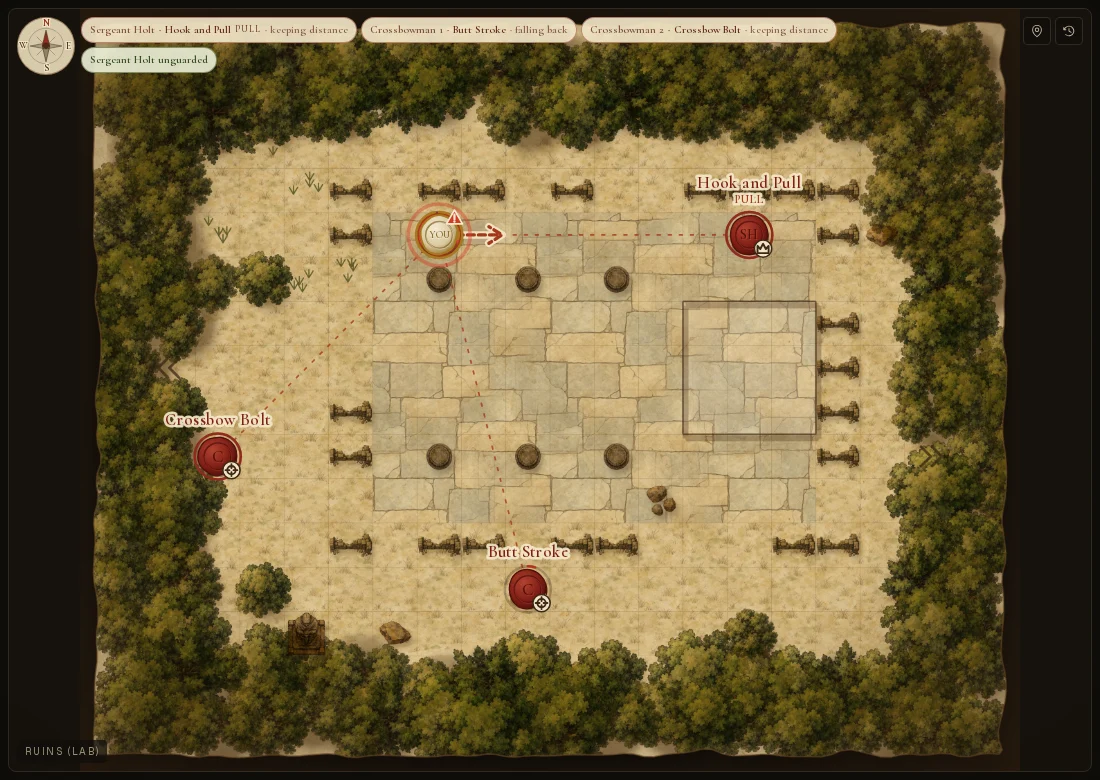
Roles
When a battle map is made, each foe is given a role, and moves by it:
- Rusher: charges straight in. If its blow misses, it's overreached, and easier to hit next turn.
- Shooter: keeps its distance, near cover or high ground. Caught up close, it's easier to hit and its shots are worse.
- Sniper: holds far back while it has a clear line. Get up close, as with a shooter.
- Suppressor: holds a spot and keeps firing. Get up close.
- Flanker: works round to your side. After it crosses open ground, it's exposed.
- Holder: stands between you and someone it guards, facing you. Hit it from the side or behind.
- Area: hangs back behind a friend and winds up a big blow. Hit it hard while it's winding up, and the blow breaks.
- Leader: stays behind its fighters. When it falls, the rest are shaken and fight worse.
Snipers and suppressors only appear where there are guns. Roles are about how a foe moves, not what it carries: a dragon that breathes fire still bites when it gets close.
Groups
Hordes and crowds move in a formation:
- Swarm: they surround you, as before.
- Line: a rank across your path that closes a few squares a turn and is slow to turn. Its sides and back are open.
- Screen: shooters hold back, and the rest stand in front of them.
- Pack: they split and come at you from two sides.
Facing
Big foes, holders and the bodies of a line now face a way, and turn toward whoever they're fighting at the end of each turn. Hitting a big foe from behind is easier. And a big foe's straight blows and breath don't reach someone behind it, though sweeps and bursts still reach all round.
On the map
- Each foe shows a small mark for its role, and its next move ("closing in", "keeping its distance", "circling", "guarding", "falling back") on its blow's chip.
- Openings show as chips naming the foe: overreached, caught up close, blind side, winding up, reloading, bunched up, in a chokepoint, leader exposed. Tap one to put it in your action.
- Openings pay. A move that uses one gets a real bonus to hit, and counts as good tactics. In worlds with a rule system, it's advantage.
Foes get as sharp as you
- Teamwork only wakes up when you fight tactically. If two of your last three turns in a fight were clever, foes start working together: a flanker goes round to your far side while another holds you, a holder guards whoever is most hurt, a badly wounded foe falls back behind a friend, and hordes use their formation.
- Fight even better, and they get warier: they keep clear of drops and fire you could throw them into, and shooters pick cover between you and them.
- What a foe is sets how far it goes. A mindless beast never runs a pincer. Cunning foes can do some teamwork, and trained soldiers can do all of it.
- If you just attack, you meet foes that move with purpose, at the same odds as before.
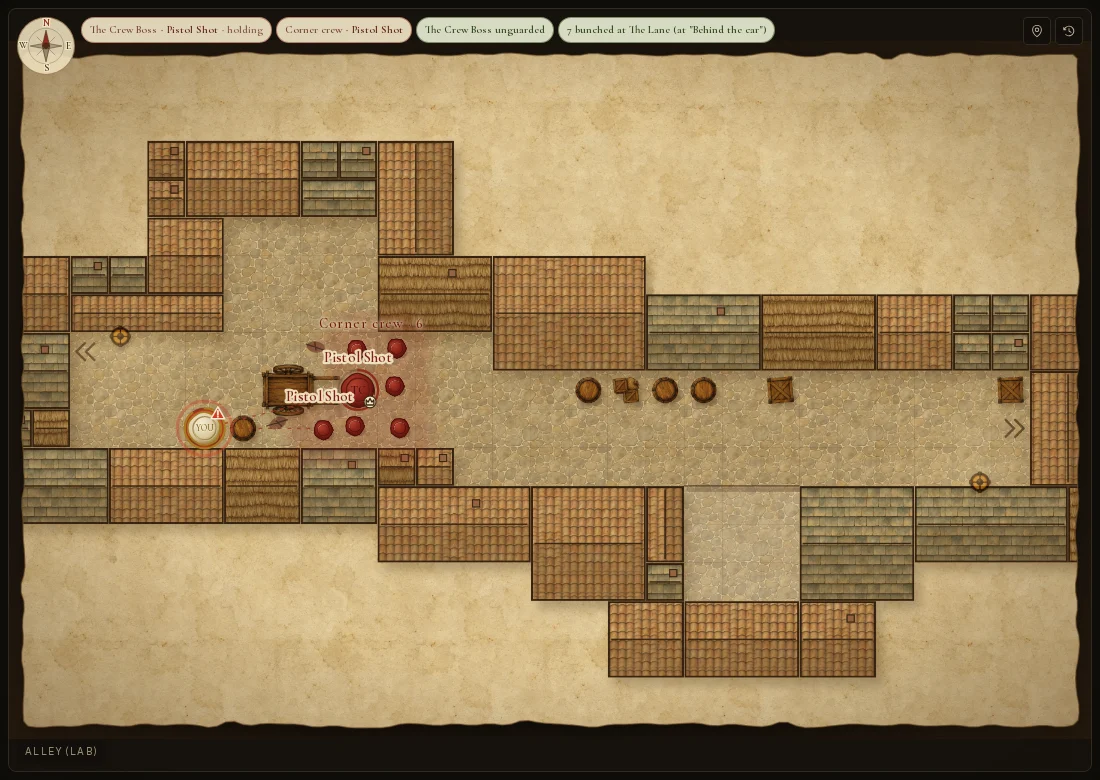
It works in every genre: a modern street crew and a sci-fi boarding party fight by the same rules as a goblin warband.