Plugins v3: the AI joins in
Plugins can now have the world's model write for them and its picture model paint for them, stop a trip on the road, put actions on your things, share menus, and keep the story off their own work.
Plugins have grown in steps. The first ones listened for moments in play and used the storyteller's own tools: a death that wakes you at your last Lamp, a revel that steals seven years. The second gave them windows of their own: a shop with a Buy on every row, a contract to sign, a crafting bench.
Version 3 gives them the world's AI. A plugin can now have the world's model write for it and the world's picture model paint for it. It also reaches two places it couldn't before: the road between towns, and the things you carry. And the storyteller now has to leave a plugin's work to the plugin.
Written fresh, not picked from a list
Until now, a plugin could only say what its builder had written in advance. A job board showed the same dozen jobs everywhere, forever. Now a plugin can ask the world's own model to write something in a form it sets: three notices for today's board, a shop's stock, a rumour, a letter, a price.
- It fits the world. It reads the world's premise and tone. When the plugin asks, it also reads the scene, the place and who's there, your character, and your story so far. It writes in the world's language.
- Names come from the world. Anyone or anywhere it names is named from the world's own name tables, never made up by the model.
- Code still keeps the rules. Numbers stay inside the range the plugin sets, a choice is always one of the plugin's own options, and anything too long is cut down. A reward can't come back as a million gold.
- Written once, shared. Something that's the same for everyone, like a town's board today, is written once and kept for up to a month. Every player reads the same board, and it costs nothing after the first time.
- No waiting. A plugin can have it written in the background while you keep playing, and show it when it's ready.
Pictures in the world's own style
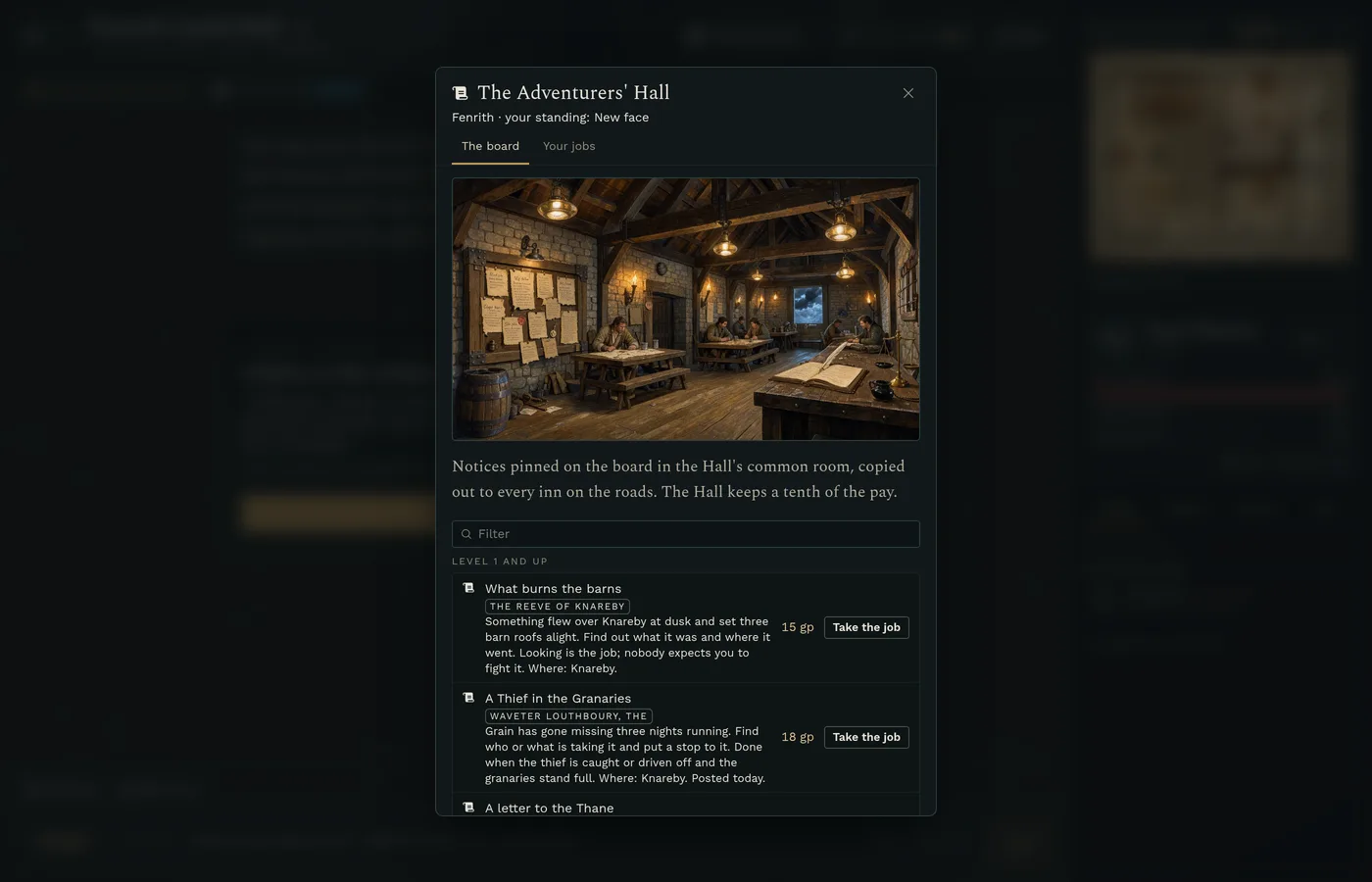
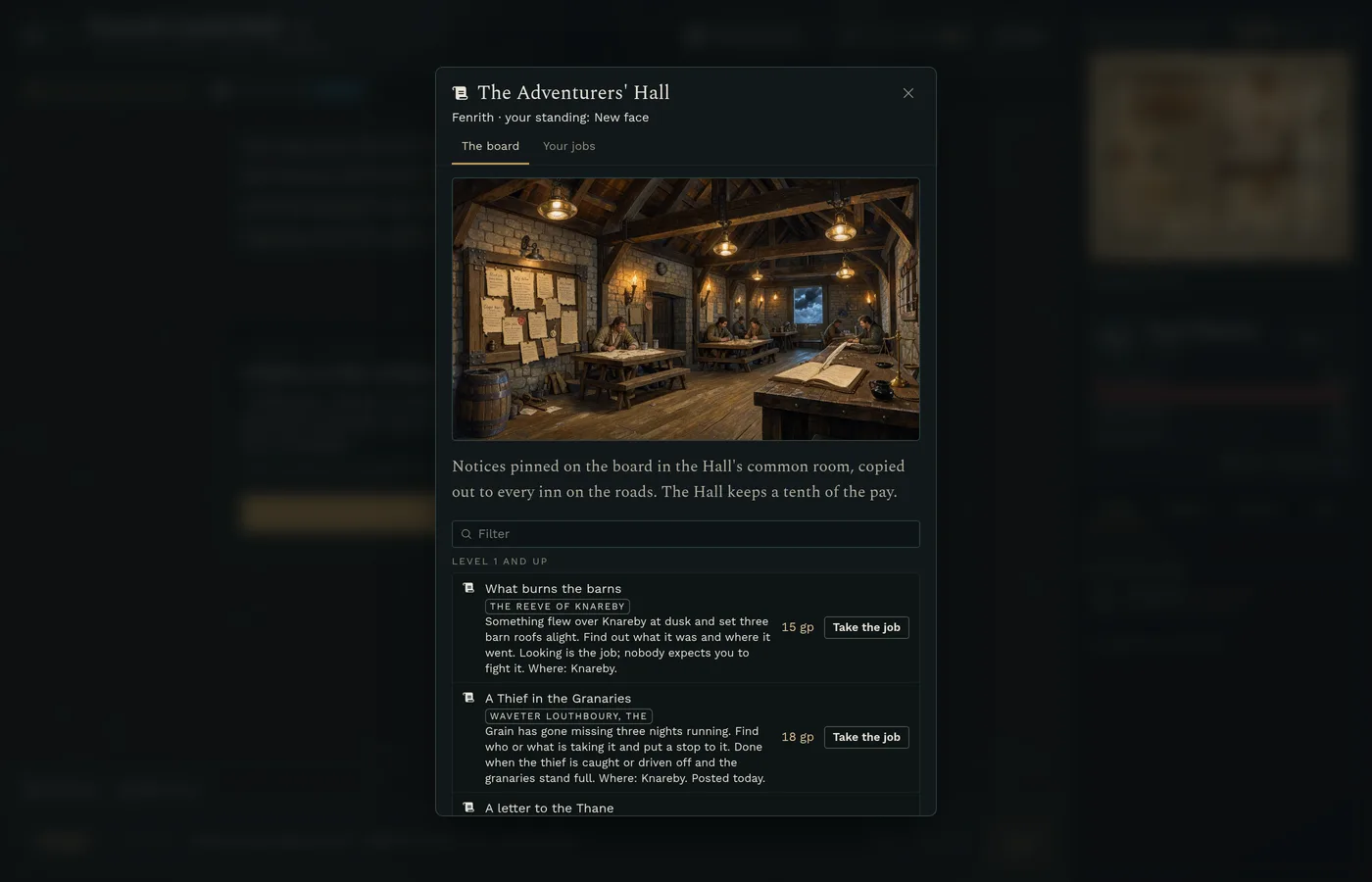
A plugin can now have the world's picture model paint a place, a thing or a sign, in the same style as the rest of the world's art: a guild hall's common room, a wanted poster, the relic you just pulled from a tomb. It shows in the plugin's window, on a card in the story, or on your character sheet.
These are never portraits: people only appear small, inside a scene. Each picture is painted once and kept for up to 30 days. A new one costs 1 credit:
- The builder pays for a picture the whole world shares.
- You pay for one made just for your character, within your usual picture limit.
- If a picture fails, the credit comes back.
The story leaves a plugin's work alone
A plugin used to ask the storyteller, in words, to leave its work alone. Now a plugin can claim what is its own, and the game holds the storyteller to it:
- The money for its service. A noodle stall's menu takes the payment for each bowl, and the story leaves the price to it. A customer can still hand over coins in the scene, but how much is the plugin's to say.
- The things only it gives. Rationed ingredients, a guild's licences, a shop's own stock. The storyteller can't hand you one, you won't find one lying around, and a merchant in the story won't sell you one.
- What only it decides. Which dishes are unlocked, when the show is on air. The story can't decide it for the plugin.
- The numbers it keeps. The storyteller always knows where they stand (the fire at 0 of 10, two jars of pepper left).
Every scene is checked against this before it reaches you.
Also fixed: a plugin's daily update could now and then run twice in a day, and a night's sleep always moves the clock on to the next day.
The road between places
A trip used to be one step: you set out, and you arrived. Now plugins see the road in between. They hear about every border you cross into another region and every night you spend out, in every world. That holds for a trip you tell the storyteller about, a coach or train you book on the map, and a march across the map.
A plugin can stop a trip partway: wolves on the road, a washed-out bridge, someone calling for help from a hollow.
- You're set down at a roadside spot in that region.
- You pay only for the distance you actually covered, in time and in fare.
- When you set out in the story, the plugin decides before the scene is written. So the storyteller tells what stopped you, not an arrival that never happened.
- To go on, just travel again.
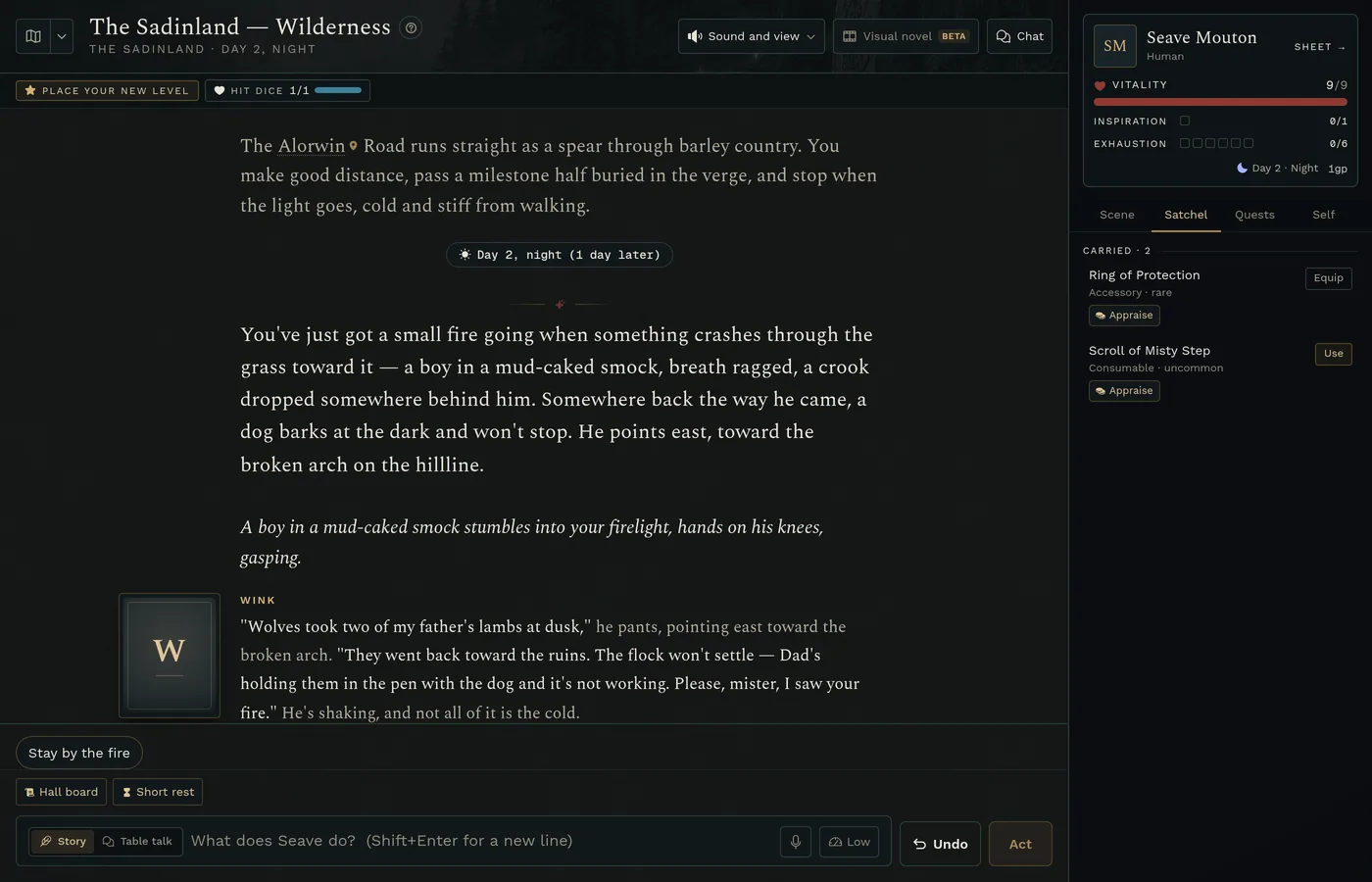
Plugins can also act as you cross a border (a toll, a welcome, a note of where you are now) and on each night out (a watch roll, a cold camp).
Actions on things
A plugin's buttons used to live only in the row above the box you type in. Now a plugin can put an action on the things themselves:
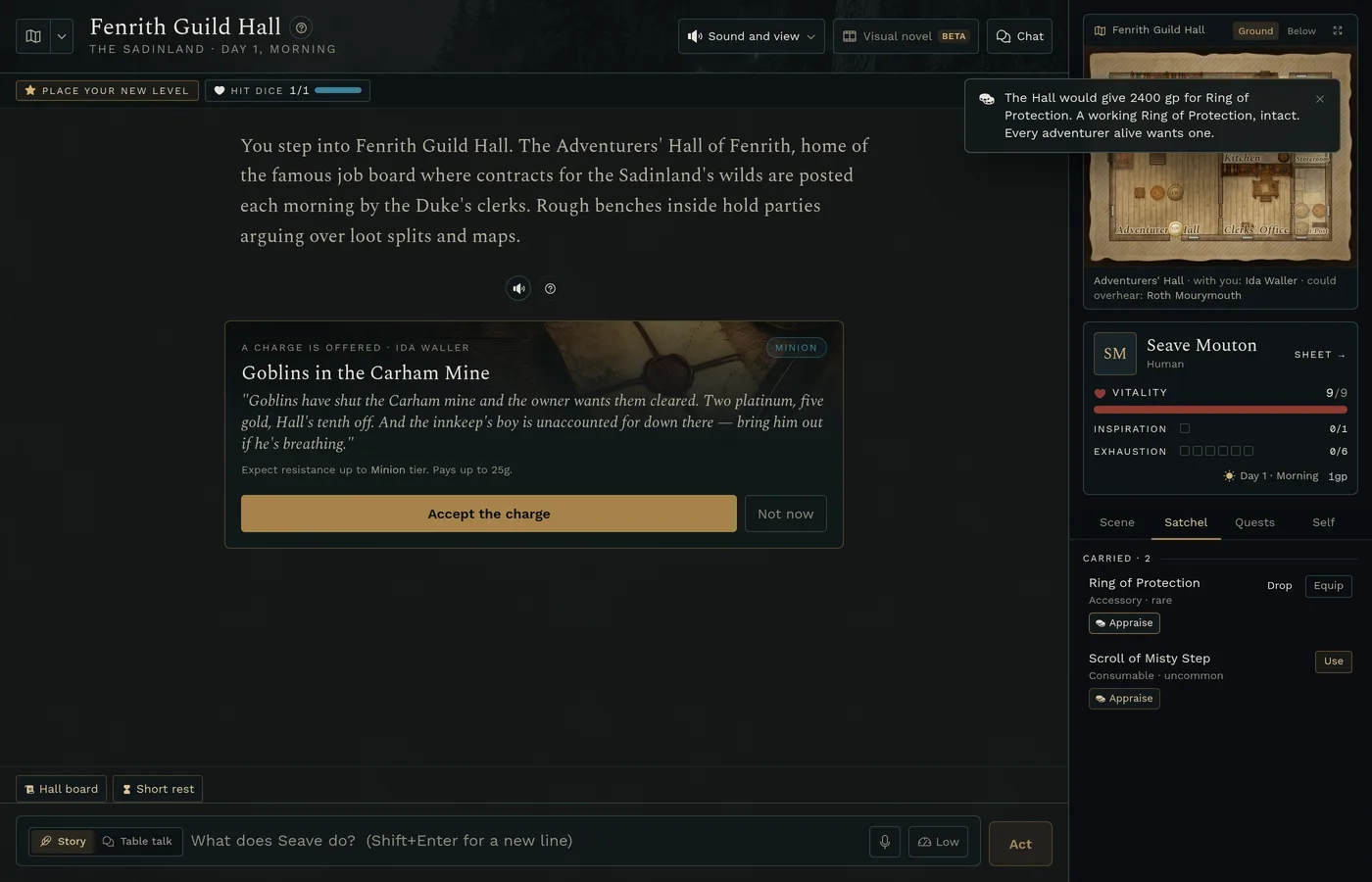
- Items in your satchel: Read on a scroll, Appraise on a ring, Attune on a relic.
- People who are here, travelling with you, or met before: Hire, Bribe, Ask about a rumour.
- Places on the map: Post a bounty on a town, Buy a house, Claim a stake.
- Quests you hold: Hand in, Abandon, Ask for more time.
An action only shows where it fits: Read only on scrolls and letters, Hire only on people who are here. When you press it, the game checks again that the thing is really yours, or really there.
Menus above the box you type in
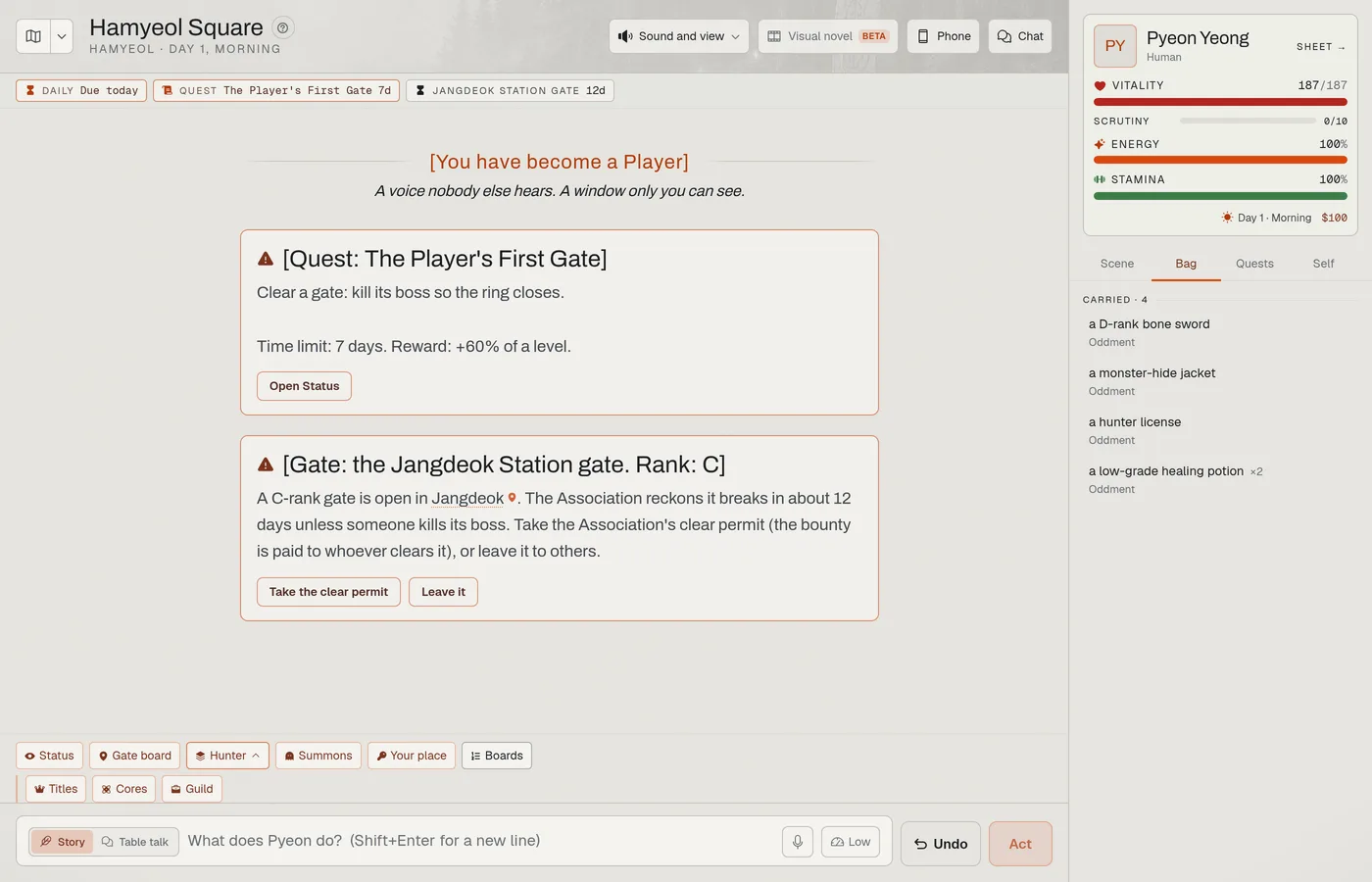
Busy worlds had a crowded row of buttons. Now buttons can share a menu: one button that opens the rest in a second row. Past five buttons and menus, the rest go under More.
Plugins can group their own buttons, and builders can make their own menus in Studio › Play screen. They also choose how many show before More.
See it in Amrion
Amrion is the first world to use the new pieces:
- The Adventurers' Hall board gets a few fresh notices every day, written for the frontier. Pay stays within the band for each job's level, and the clients are named by the world's own name tables. The board opens with a painting of the Hall's common room.
- Appraise is on everything in your pack. The Hall's clerk names a price and says why, kept within the range for the item's rarity.
- The roads aren't empty. Away from towns, about one border or night in five brings something written for that region: beasts, bandits, weather, or someone who needs help. Each border you cross tells you where you are now.
In Hamyeol, a hunter's titles, cores and guild now sit under one Hunter menu.
For builders
Ask Hob in plain words:
- "Give the tavern a board with three new rumours a day."
- "Let players appraise gems at the jeweller's."
- "When someone camps in the marshes, something should come out of the water."
- "Run a noodle stall: the menu sets the prices and keeps the takings."
Hob writes the plugin and plays it through before it tells you it works. It also claims what the plugin owns, so the story doesn't do the plugin's job.
If you write plugins yourself, the new pieces are:
wt.generateandwt.picture- the
journey.leg,journey.campandregion.enterevents onandwhenonwt.commandwt.owns, called inonEnable
The plugin docs have every one, with examples. Written text costs no credits of its own: it uses the world's model, just like the storyteller does. Try it writes text and paints pictures for real so you can see them, and a picture there costs you a credit.
Not yet
- Sea crossings keep their own encounters at sea; road events don't fire on them.
- No detours. A plugin can stop a trip, but it can't send it another way.
- Repaints don't match. The same place painted twice won't look exactly the same.
If a plugin does something it shouldn't, tell us in #suggestions in Chat. A screenshot helps.